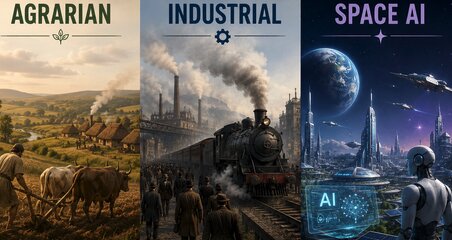
Around 250 years ago, Adam Smith’s The Wealth of Nations described the emergence of mechanized manufacturing, transforming industries and the global economy. Yet, few people realize that similar transformations have occurred multiple times in the past.
Historical Precedents for AI-Driven Change
The Industrial Revolution was not the first time that technological advancements reshaped the world’s economies. Before that, the introduction of the steel plow in ancient China, around 300 BCE, allowed for more efficient agriculture, boosting food production and population growth. Similarly, the development of the waterwheel during the Middle Ages enabled mass production of textiles, contributing to the growth of trade and urbanization.
These historical precedents share common traits with the current AI-driven shift. Each era saw the rise of new technologies and processes that dramatically altered industries and global economies. The spinning jenny and power loom of the Industrial Revolution, for instance, enabled mass production of textiles, similar to how AI and automation are transforming manufacturing today.
Key Characteristics of Transformational Shifts
Transformational events often share certain characteristics. They usually involve significant technological advancements, but also changes in business models, supply chains, and societal attitudes. During the Industrial Revolution, for example, the growth of factories and mass production led to changes in the way goods were made, distributed, and consumed.
AI-driven changes are following a similar path. As automation and machine learning increase efficiency and productivity, new business models and supply chains are emerging. Companies like Amazon and Alibaba have already disrupted traditional retail, while AI-powered startups are changing industries such as healthcare and finance.
What This Means
The current transformation is not a new phenomenon, but rather the latest iteration of a recurring pattern. As we adapt to the rapid changes brought about by AI, we should recognize that this shift is an opportunity to rethink industries, business models, and societal systems. By embracing this transformation, we can unlock new levels of productivity, innovation, and growth, ultimately benefiting individuals, businesses, and communities worldwide.