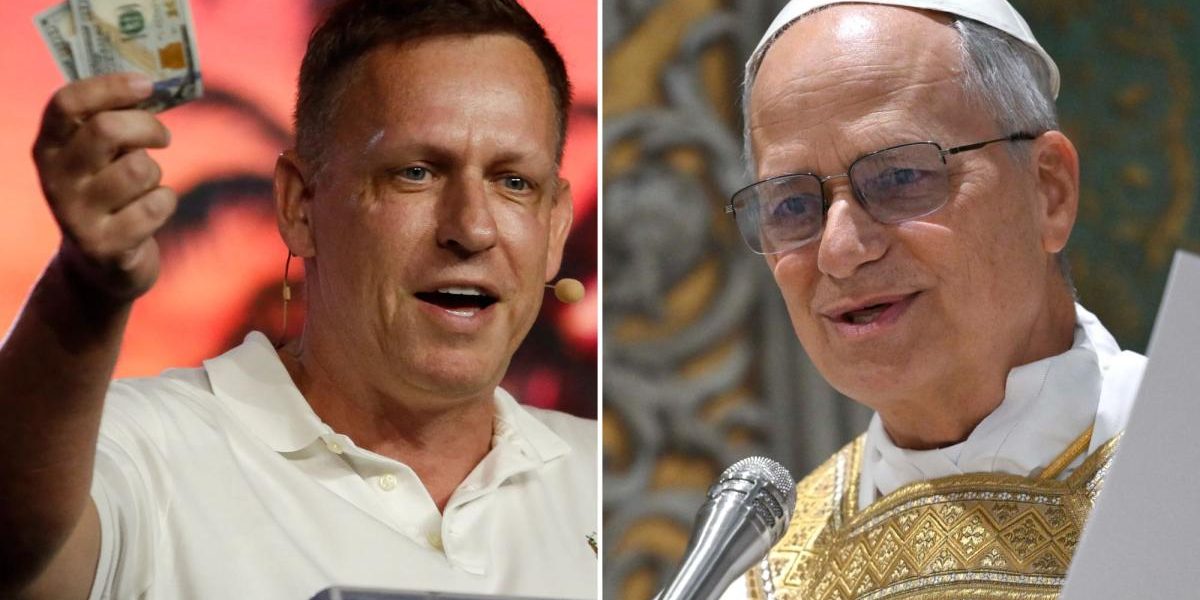
Pope Leo XIV, in a scathing Monday encyclical letter, accused Silicon Valley of recklessly driving humanity toward an existential crisis, sparking a cold war between the Vatican and the tech hub.
The Pope’s sharp rebuke specifically targeted the rapid development of AI, calling it a “tool of the devil” that could bring about the downfall of human civilization. This isn’t the first time the Vatican has warned about AI, but the Pope’s words carry significant weight.
Not to be outdone, Peter Thiel, billionaire entrepreneur and AI investor, responded with a blog post titled “The Real Antichrist.” Thiel dismissed the Pope’s concerns, labeling them an “elitist” attempt to suppress innovation. He argued that the Vatican’s stance on AI is outdated and that the benefits of the technology far outweigh the risks.
The tension between Silicon Valley and the Vatican is nothing new. The two have been at odds over issues like climate change, social media regulation, and now AI. However, the stakes are higher than ever, with both sides accusing each other of jeopardizing humanity’s future.
A Holy Row Over AI
The Vatican’s concerns about AI are largely centered on its potential to exacerbate social issues like inequality and job displacement. The Pope’s letter emphasized the need for a more humane approach to AI development, one that prioritizes the well-being of people over profit.
In contrast, Silicon Valley sees AI as a key driver of progress, capable of solving some of humanity’s most pressing problems. The likes of Thiel and Elon Musk believe that AI has the potential to revolutionize industries and create new opportunities for growth.
The Battle for the Future
The standoff between the Vatican and Silicon Valley highlights the deepening divide between those who see technology as a force for good and those who fear its consequences. As the debate rages on, it’s worth considering what this means for the average person.
Ultimately, the future of AI will be shaped by how we choose to develop and deploy it. If we prioritize profit over people, we risk exacerbating social issues and creating new problems. On the other hand, if we take a more holistic approach to AI, one that balances progress with human well-being, we may create a better future for all.
What This Means
For now, the battle between the Vatican and Silicon Valley is a symbolic one, reflecting the fundamental disagreements over the role of AI in society. As the debate continues, it’s essential to consider the human impact of AI and strive for a more balanced approach to development. The future of humanity depends on it.