Bay Point, Calif. Teacher Emily Lee’s Classroom Just Got a Lot Smarter
Special ed teachers are increasingly relying on AI to create customized education plans, often with promising – but imperfect – results.
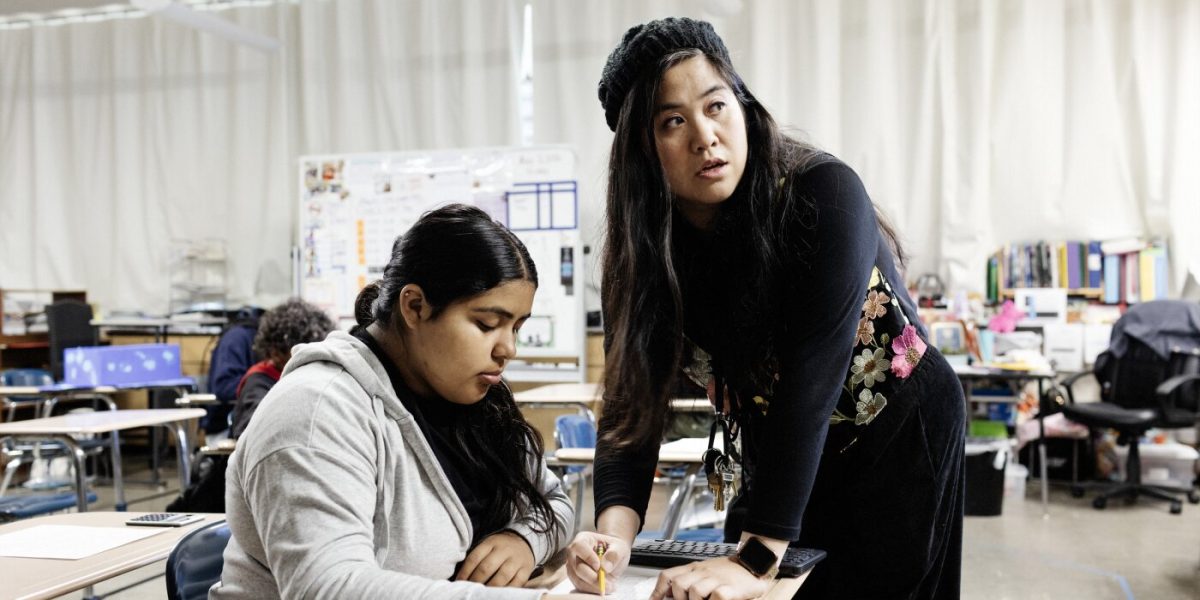
For Emily Lee, a special education teacher in Bay Point, California, using AI in the classroom was a last resort. With a caseload that far exceeded the recommended number of students per teacher, she found herself juggling up to 30 individual plans at a time. It was unsustainable. “I was doing everything myself,” she says. “I was creating lesson plans, teaching, and assessing – it was exhausting.” That’s when she started using AI tools to help streamline her work.
Lee uses an AI platform to generate customized education plans tailored to each student’s unique needs. The tool analyzes educational data, learning objectives, and even student behavior to produce a comprehensive plan. While Lee has seen improvements in her students’ progress, she’s also aware of the potential risks. “There’s still a lot of human judgment required,” she says. “You need to understand the nuances of each student’s behavior and adjust accordingly.”
What the Research Says
One recent study suggests that AI-driven education plans can improve teacher workload and, in some cases, student outcomes. Researchers at Stanford University found that teachers who used AI tools experienced a 30% reduction in time spent on planning and a 25% increase in students’ passing rates. However, the study also noted that the effectiveness of AI tools depends heavily on teacher buy-in and training.
The Dark Side of AI in Special Ed
While AI may offer a temporary reprieve for overworked teachers, critics warn that relying too heavily on technology could exacerbate existing issues. “You can’t replace the human touch,” says special education advocate, Dr. Maria Rodriguez. “AI may be able to analyze data, but it can’t understand the emotional and social aspects of learning.”
The Future of Special Ed and AI
As special education teachers continue to navigate the complexities of AI integration, it remains to be seen whether this technology will be a game-changer or a Band-Aid solution. For now, Lee remains optimistic. “It’s not a replacement for human teachers, but it’s a tool that can help us be more effective,” she says. What this means in practice is that teachers can focus on the aspects of teaching that require empathy and creativity, while AI takes care of more administrative tasks.