Nicknamed the “AI data cost dilemma,” the issue of high infrastructure costs associated with processing and storing vast amounts of data has long plagued the development of artificial intelligence.
A New Approach
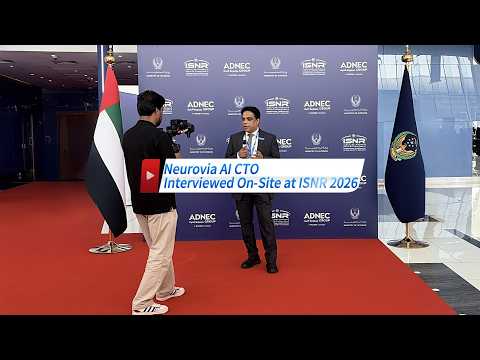
That’s where Mansoor Ali Khan, newly appointed Chief Technology Officer at Neurovia AI, comes in. Khan’s recent presentation at the International Society for Neurophysics and Rehabilitation (ISNR) conference in Abu Dhabi highlighted the company’s innovative solution to this problem.
Neurovia AI’s approach involves the use of advanced machine learning algorithms to identify and eliminate redundant data, which takes up a significant amount of space on servers. This process, called “data compression,” is not new, but Neurovia AI’s method is.
According to Khan, the company’s algorithms are trained on a vast dataset of real-world examples, allowing them to learn and adapt to the specific needs of each application. This makes it possible to eliminate data that’s not essential to the functioning of the AI model, thereby reducing storage costs and unlocking previously inaccessible infrastructure capacity.
Simplifying AI Development
The potential impact of this innovation is significant. By reducing the financial burden of data storage, developers will be able to focus on creating more complex AI models, leading to breakthroughs in fields such as healthcare, finance, and transportation.
Khan believes that Neurovia AI’s technology will also make it easier for developers to collaborate on large-scale AI projects. With reduced costs and increased efficiency, they’ll be able to work together more effectively, leading to faster development times and improved results.
What this means
For developers and businesses, Neurovia AI’s solution means increased flexibility and reduced costs. With the ability to process and store vast amounts of data more efficiently, they’ll be able to push the boundaries of what’s possible with AI.
In practical terms, this could mean the creation of more personalized healthcare experiences, more accurate financial predictions, and more efficient transportation systems. The potential is vast, and it’s now up to developers and businesses to capitalize on this innovation.