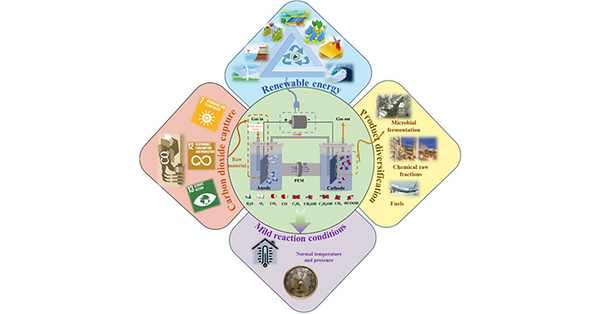
A team of researchers from Southeast University and Korea University has developed more efficient copper catalysts to convert CO₂ into valuable fuels, potentially helping to mitigate climate change.
Their discovery focuses on improving the stability, selectivity, and scalability of copper-based catalysts, a crucial step in commercializing CO₂ conversion technology. Copper has been identified as a promising material for this purpose due to its affordability, abundance, and catalytic properties.
What’s driving the need for smarter catalysts?
The amount of CO₂ in the atmosphere continues to rise, intensifying climate change. Reducing carbon emissions is a pressing global issue, and CO₂ conversion technology offers a potential solution. By converting CO₂ into fuels, researchers hope to create a new, carbon-neutral energy source.
This approach faces significant technical challenges, including the need for highly selective and stable catalysts. Copper-based catalysts have shown promise, but their performance has been limited by issues like deactivation and low selectivity. The researchers’ new catalyst design aims to overcome these limitations.
The breakthrough: Improved catalyst performance
The team’s advanced copper catalysts exhibit enhanced stability, selectivity, and scalability, paving the way for commercial-scale CO₂ conversion. Their design leverages a unique combination of materials and surface structures to improve the catalyst’s performance.
What this means: This breakthrough has the potential to accelerate the development of carbon-neutral fuels and contribute to a reduction in CO₂ emissions. The researchers’ work offers a promising solution for addressing the climate crisis and mitigating the effects of anthropogenic CO₂ levels.
To achieve this milestone, the researchers employed advanced techniques, including density functional theory (DFT) calculations and experimental characterization. Their approach involved optimizing the catalyst’s surface structure and composition to enhance its performance.