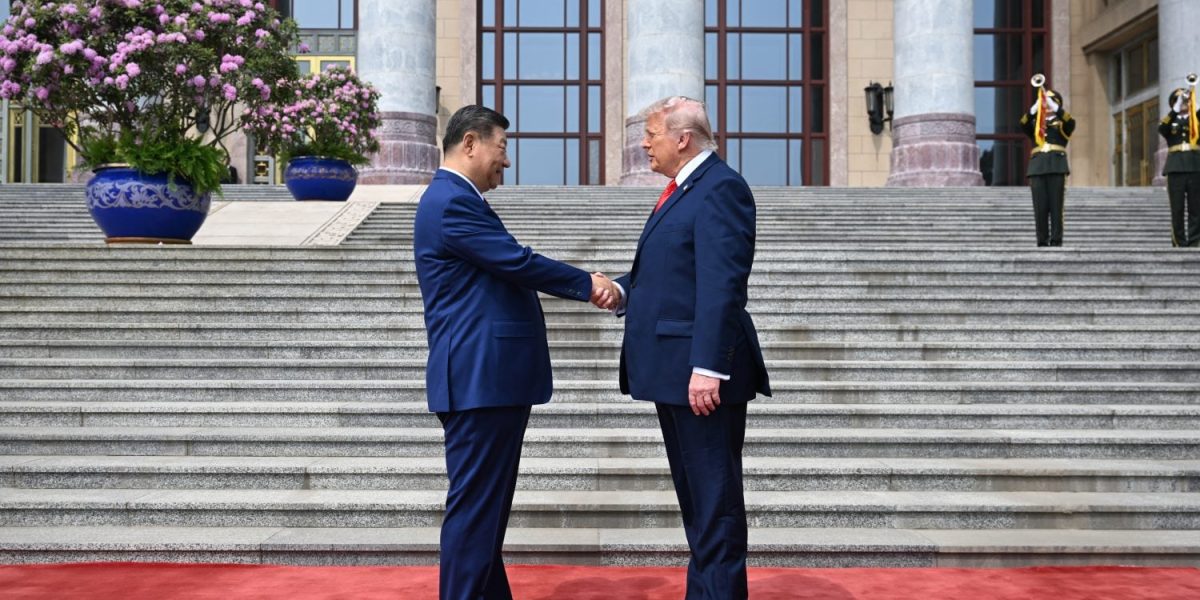
A surprise deal on Chinese bean imports has been cast as a key takeaway from the recent summit between U.S. President Donald Trump and Chinese President Xi Jinping.
As historian Rana Mitter explains, the meeting between Trump and Xi marked a significant shift in the balance of power between Washington and Beijing.
The Business of Trade
While Trump’s administration has long been critical of China’s trade practices, the two leaders agreed to a deal that would see China increase purchases of U.S. soybeans, apples, and other agricultural products in exchange for concessions on Chinese access to the U.S. market.
The deal also included a commitment from China to buy $200 billion more in U.S. goods and services over the next two years, including Boeing aircraft.
“Beans and Boeings,” one diplomat reportedly quipped, encapsulating the essence of the agreement.
A Shift in the Balance of Power
Mitter points out that the meeting marked a significant shift in the balance of power between Washington and Beijing, as the U.S. has long been seen as the dominant player in global trade.
The agreement suggests that China is willing to make concessions in order to preserve its economic relationship with the U.S., and may be prepared to make further concessions in the future.
This shift in the balance of power has significant implications for the global economy, and could potentially lead to a re-evaluation of the U.S.-China trade relationship by other countries.
What this Means
The agreement between Trump and Xi has significant implications for the global economy and the balance of power between Washington and Beijing.
For business leaders and investors, the deal suggests that China is committed to making concessions in order to preserve its economic relationship with the U.S., and may be prepared to make further concessions in the future.
For policymakers, the agreement raises questions about the future of the U.S.-China trade relationship and the potential for other countries to re-evaluate their relationships with both nations.
As one diplomat quipped, “this is a wake-up call for countries around the world to reassess their relationships with the U.S. and China.”