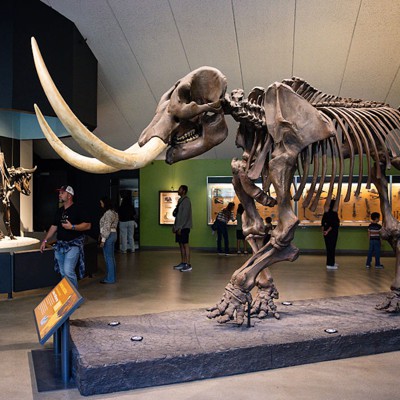
Ben Lamm, CEO of Colossal Biosciences, is betting $100 million that extinct species can be brought back to life.
Lamm’s company is working to revive the woolly mammoth, and he sees de-extinction as a problem of engineering, not ethics. To him, ancient DNA, AI, and CRISPR are the tools scientists need to make it happen. The challenge, however, lies in accessing usable genetic material.
According to Lamm, the process of drilling into a piece of ancient bone can be as much a matter of luck as science. Move the drill a quarter inch to the side, and suddenly a treasure trove of genetic information is within reach. It’s this kind of serendipity that sets the wheels of de-extinction in motion.
AI powers de-extinction efforts
Lamm believes that AI plays a crucial role in analyzing the extracted genetic material. By leveraging machine learning algorithms, scientists can identify patterns and connections that might elude human researchers. This not only speeds up the process but also enables the team to make more informed decisions about which genetic material to prioritize.
De-extinction: A long shot or a feasible goal?
De-extinction is, without a doubt, a complex and ambitious project. It requires not only technical expertise but also a substantial amount of resources. Critics argue that the focus on de-extinction takes away from more pressing conservation efforts. On the other hand, proponents like Lamm argue that de-extinction could serve as a catalyst for greater public interest in conservation and the natural world.
What this means
The implications of de-extinction, if successful, are far-reaching. For one, it could revolutionize our understanding of genetic inheritance and the evolution of species. But beyond the scientific implications, de-extinction also raises questions about the ethics of playing God and the potential consequences of introducing an extinct species back into a modern ecosystem. As Ben Lamm and his team at Colossal Biosciences push the boundaries of what’s possible, one thing is clear: the future of de-extinction is not just about science, but about the kind of world we want to create.