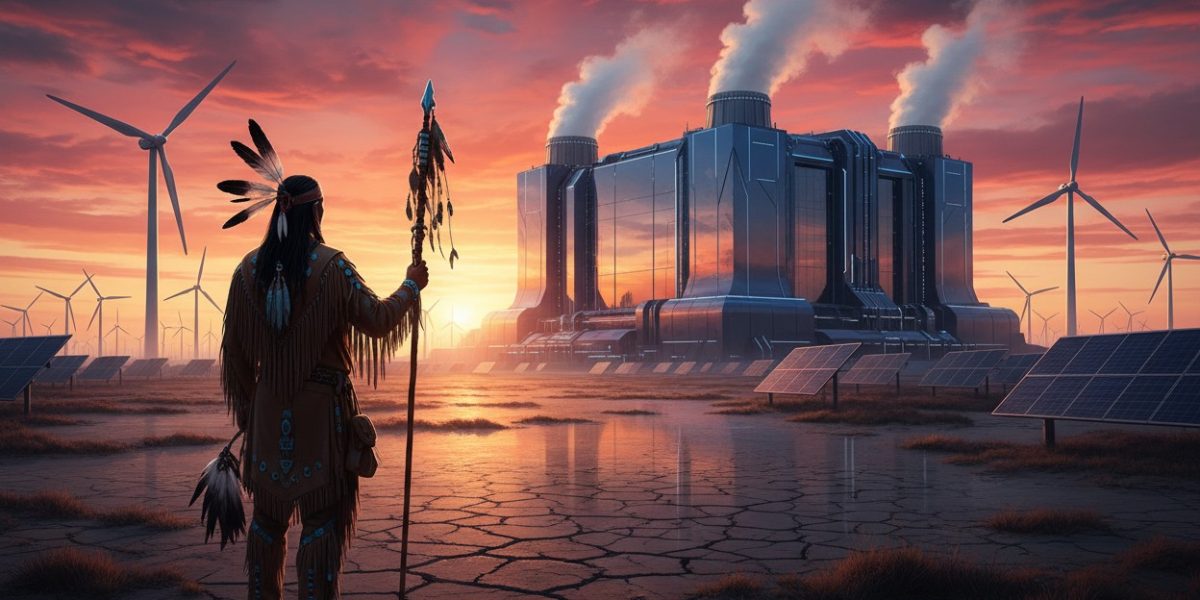
Tribal Lands Under Siege: Big Tech’s Data Center Expansion
Amazon’s $15 billion data center expansion in Oregon has sparked heated debate about the role of indigenous communities in the tech industry. However, this isn’t the only development of its kind. At least 37 proposed data center projects are mapped on or near Native American tribal lands, according to trackers cited by the advocacy group Honor the Earth.
The push for data center expansion in Native American territories is driven by the need for cheap land, power, and cooling systems, a major factor in keeping costs down. However, many Native American communities are resisting this trend, citing concerns over environmental degradation, cultural desecration, and erosion of tribal sovereignty.
The Navajo Nation, for instance, has already seen significant data center development in the Arizona desert. The nation’s largest utility company has partnered with a big tech firm to build a massive data center near the town of Kayenta. While the development promises new jobs and revenue, it also poses significant risks to the Navajo Nation’s pristine natural environment and sacred lands.
Lack of Transparency and Tribal Consultation
Tribal leaders and environmental advocates argue that big tech companies often fail to engage in meaningful consultation with Native American communities about data center projects. They claim that local residents are often left in the dark about development plans, and that tribal rights and concerns are consistently marginalized.
One such example is the proposed data center project by Microsoft in the Pine Ridge Indian Reservation, South Dakota. The project has faced fierce resistance from local Oglala Sioux leaders, who argue that the development threatens the area’s sensitive ecosystem and cultural heritage.
Tribal Resistance and the Future of Big Tech
As big tech companies continue to expand their operations on or near Native American lands, tribal resistance is growing. Honor the Earth’s director, Winona LaDuke, notes that “these projects are not only a threat to our lands and our people, but also a reminder of the historical injustices faced by Native American communities.”
What this means: big tech companies seeking to expand in Native American territories must prioritize transparency, tribal consultation, and environmental stewardship. The fate of these projects will test the industry’s commitment to corporate social responsibility and its willingness to listen to the concerns of indigenous communities.