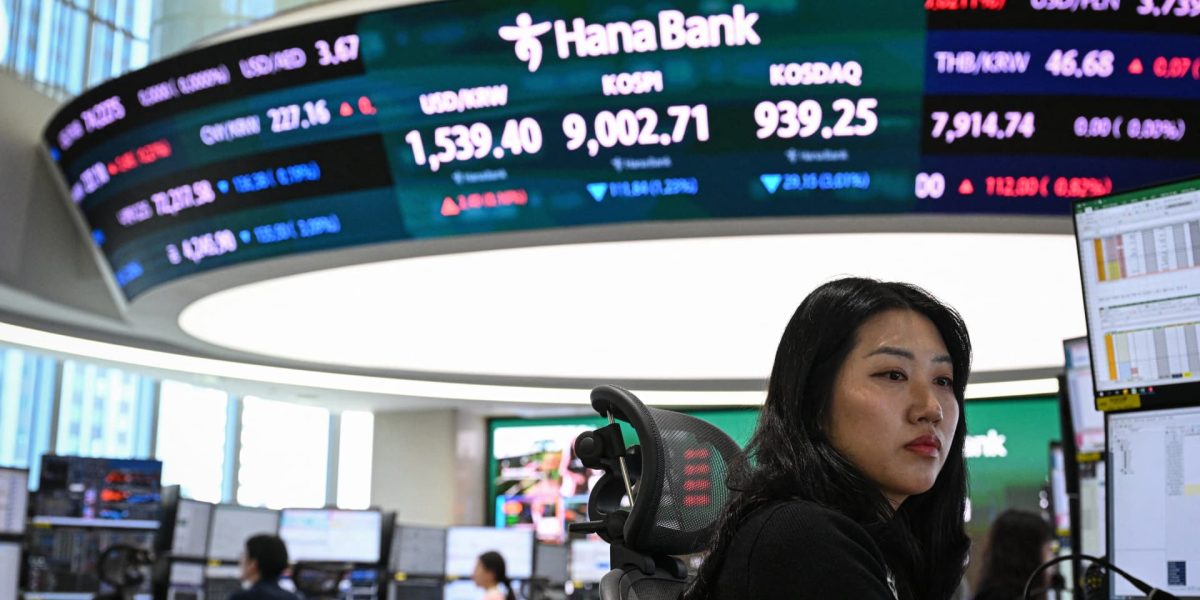
Kospi’s Plunge: What’s Behind the Bear Market in South Korea?
South Korea’s Kospi has tumbled into bear territory, down 20% from its record high set in June, following a 5% drop on Wednesday. This sudden downturn has sent shockwaves through the global market, leaving investors wondering what’s behind the Kospi’s drastic fall.
The Global Economy Takes a Hit
The Kospi’s bear market was triggered by a series of economic woes, including a slowdown in South Korea’s export sector, which accounts for a significant portion of the country’s GDP. The US-China trade tensions have had a ripple effect on the global economy, and South Korea is feeling the pinch. **According to LSEG data, the Kospi has been steadily declining since April**.
South Korea’s Economy: A Perfect Storm
While the country’s strong tech sector has historically been a driving force behind its economic growth, it’s not enough to offset the impact of the slowing exports. The electronics and automotive industries, which are crucial to South Korea’s economy, have been particularly hard hit by the trade tensions. **South Korea’s trade deficit has widened significantly in recent months**.
The country’s central bank, the Bank of Korea, has been attempting to boost economic growth through monetary policy, but so far, the efforts haven’t been enough to stem the tide. The bank has cut interest rates twice this year, but the effects have been minimal. The government’s efforts to stimulate the economy through fiscal policy have also been hampered by a lack of effective stimulus packages.
What this means: The Kospi’s plunge is a red flag for investors, signaling potential economic instability in South Korea. As the country’s economy continues to struggle, the bear market is likely to persist, and investors should be prepared for more volatility in the coming months.
A Global Economic Slowdown?
The Kospi’s bear market is a worrying sign for the global economy, which is already showing signs of slowing down. If South Korea’s economy continues to decline, it could have a ripple effect on other economies, particularly those that rely heavily on trade. **The International Monetary Fund has already warned of a potential global economic slowdown**.
The Kospi’s fall into bear territory is a stark reminder of the interconnectedness of the global economy. As the world’s largest economies grapple with their own economic challenges, the Kospi’s decline serves as a warning sign that the global economic slowdown could be more severe than initially thought.