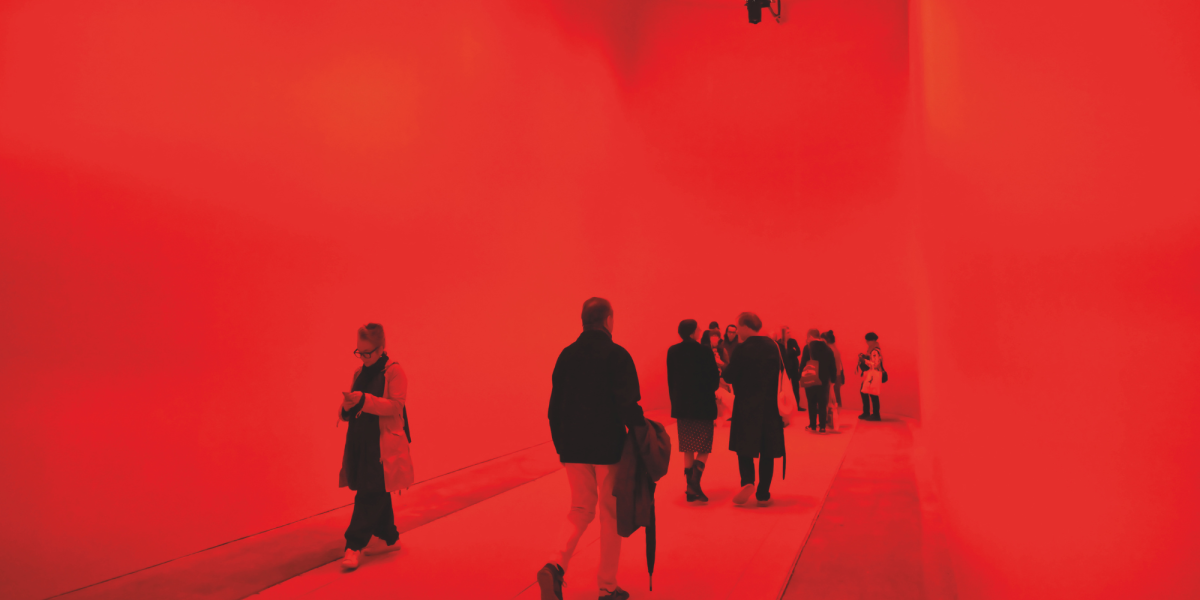
The Venice Biennale’s AI-Powered Provocation
The Venice Biennale, an art exhibition showcasing the world’s most renowned contemporary artists, is making headlines for more than just its breathtaking architecture and stunning cityscapes. This year’s show has sparked controversy with several works that incorporate artificial intelligence (AI) to challenge viewers’ perceptions and push the boundaries of the medium.
The exhibition’s AI-powered installations have drawn attention, with some critics praising the innovative use of technology and others denouncing it as pretentious. According to Katrin Bennhold, writing for The New York Times, “The Venice Biennale is the world’s most prestigious international art exhibition.” Her words underscore the significance of this event, where the world’s top artists converge to create, exhibit, and debate the state of contemporary art.
Provoking the Norm
One of the most striking installations is by artist Yayoi Kusama, who has been using AI to generate immersive environments that explore the human experience. Her work, titled “Infinity Room“, uses AI to create an infinite repetition of mirrored rooms, challenging viewers to confront their own perception of space and infinity.
This exhibit is part of a larger trend in contemporary art, where artists are increasingly using AI to create thought-provoking works that question the nature of reality. By harnessing the power of machine learning algorithms, artists are able to create complex systems that can generate art, music, and even entire universes. As the art world continues to grapple with the implications of AI, The Venice Biennale is serving as a platform for these innovative artists to push the boundaries of what we consider “art”.
The AI-Powered Artists
Behind the scenes, artists are experimenting with AI tools to create new forms of art that are impossible to achieve manually. For instance, Robbie Barrat is using AI-generated portraits to explore the relationship between identity and technology.
This new wave of AI-powered artists is forcing the art world to redefine what constitutes art and who can create it. With the rise of machine learning, we are seeing a democratization of art creation, where anyone with access to AI tools can become an artist. This shift raises questions about authorship, ownership, and the value of human creativity in an era dominated by machines.
What this means
The Venice Biennale’s AI-powered installations are not just art – they’re a reflection of our times. As we continue to integrate technology into all aspects of our lives, the art world is responding with innovative works that challenge our perceptions and question the nature of reality. By embracing AI, contemporary artists are pushing the boundaries of what we consider “art” and forcing us to confront the implications of a world where machines can create and even replace human creativity.