Researchers Uncover the Secret to Methane Production in Methanogens
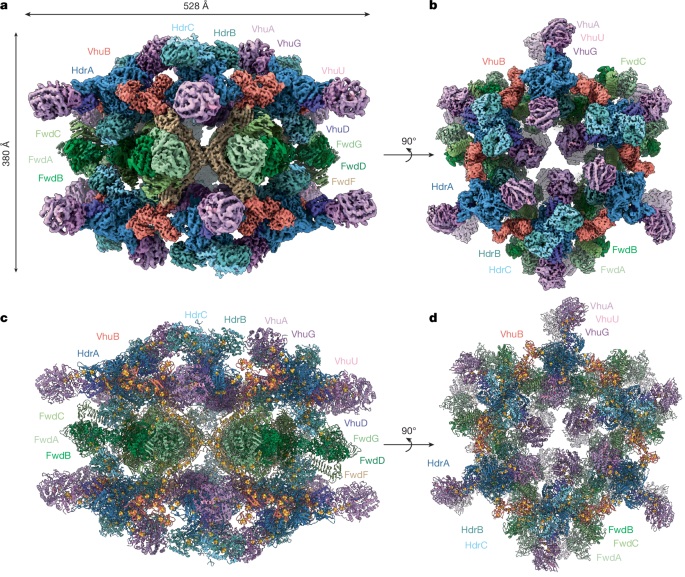
The largest known protein complex in living organisms has been mapped in methanogens, bacteria that produce methane in environments devoid of oxygen. The super-assembly, dubbed Hdr–Vhu–Fwd, spans 8 million Daltons, making it a behemoth in the microbial world.
The Hdr–Vhu–Fwd super-assembly is a complex of 28 individual proteins, arranged in a modular fashion that allows it to adapt to different environments. This adaptability is crucial for methanogens, which thrive in anaerobic ecosystems such as wastewater treatment plants, wetlands, and the guts of ruminant animals. By studying this complex, scientists can gain insights into how these microbes produce methane and how this process might be influenced by factors like climate change.
What This Means for Our Environment
Methane is a potent greenhouse gas, and understanding how methanogens produce it is essential for predicting and mitigating the impact of climate change. As the researchers involved in this study note, elevated CO2 levels can stimulate methanogen growth, leading to increased methane emissions. By unraveling the architecture of the Hdr–Vhu–Fwd super-assembly, scientists can better grasp how these microbes respond to environmental changes, ultimately informing strategies to reduce methane emissions and slow global warming.
The Implications for Synthetic Biology
The discovery of the Hdr–Vhu–Fwd super-assembly also has implications for synthetic biology, where scientists aim to engineer microbes to produce desired chemicals or fuels. By understanding the molecular mechanisms underlying methane production, researchers might be able to design more efficient and sustainable biotechnologies. This knowledge could also inform the development of novel agricultural practices, such as microbes that enhance crop yields or improve soil health while minimizing methane emissions.
The study on the Hdr–Vhu–Fwd super-assembly is a testament to the rapid advances in structural biology, which are enabling scientists to study complex biological systems at an unprecedented level of detail. As researchers continue to dissect the intricate machinery of living organisms, they will uncover more secrets about how life works and how we can harness its potential to create a better future.