**Researchers harness AI to measure ‘frame-dragging’ effect around Earth**
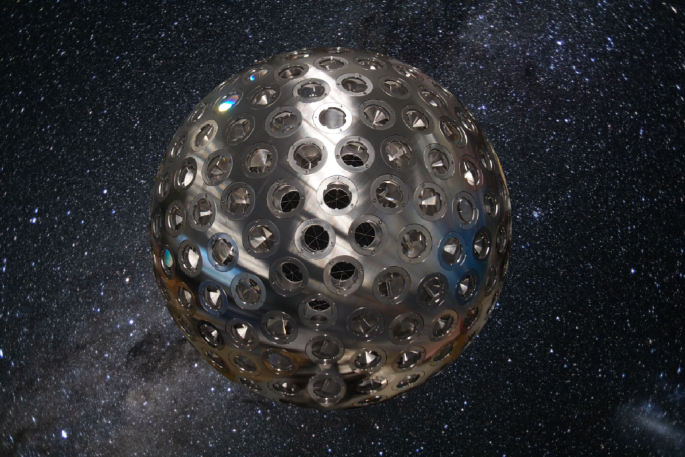
Scientists have used a combination of satellites, including the LARES-2, to measure the ‘frame-dragging’ effect around Earth with unprecedented precision. This phenomenon, also known as “gravitomagnetism,” is a prediction made by Albert Einstein’s general relativity theory.
The LARES-2, LAGEOS, and GRACE satellites formed a crucial part of this study, orbiting the Earth and providing the precise data needed to detect this subtle effect. This effect essentially describes how the rotation of massive objects, like our planet, distorts the fabric of spacetime around them. The satellites’ orbits were used as a kind of “probe” to measure the degree of distortion caused by Earth’s rotation.
Researchers Nils Yunes and Will, in their book “Is Einstein Still Right?”, explored the significance of general relativity in the modern era. The success of this experiment not only reinforces Einstein’s theory but also sets limits on alternative gravity theories, which attempt to explain the same phenomenon.
By improving measurements of Earth’s tides, this study also highlights the potential applications of satellite-based measurements. This technology can be used to monitor global sea-level changes, ocean currents, and even weather patterns. The LARES-2 mission is just one example of how scientists are employing AI-powered methods to explore the intricacies of our universe.
What this means for global sea levels and climate science
The increased accuracy in measuring Earth’s tides can have significant implications for climate scientists. Better understanding of ocean currents and sea-level changes can help scientists model and predict the impact of global warming on coastal regions. This knowledge will be crucial in developing effective strategies for mitigating the effects of climate change.
The ongoing quest for precision in satellite-based measurements
The success of LARES-2 demonstrates the power of combining multiple satellite systems to gather data. Researchers will likely continue to refine their techniques, pushing the boundaries of what’s possible with satellite-based measurements. This ongoing quest for precision will provide scientists with a deeper understanding of the universe, and potentially lead to breakthroughs in fields like astronomy and geophysics.