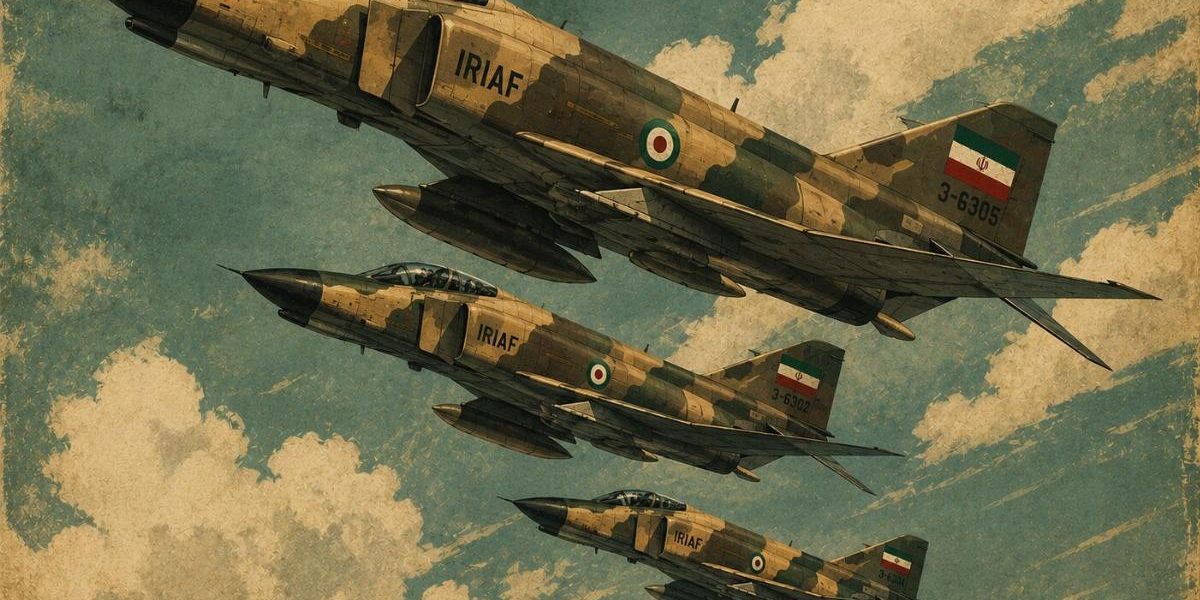
The F-4 Phantoms, once the crown jewel of the US Air Force’s arsenal, have seen their fair share of action over the years. In the 1970s and 1980s, these iconic jets were deployed in combat zones across the globe. But today, a surprising number of these Cold War-era warplanes are still flying – and not just in the skies of the United States.
Iran’s F-4s: A Symbol of Enduring Resilience
Thanks to a combination of shrewd repurposing and scrappy maintenance, the Islamic Republic of Iran has managed to keep dozens of F-4 Phantoms in the air. This may seem like a relic of the past, but what’s impressive is that many of these planes were purchased by Iran in the 1970s, and have since been modified to suit the country’s needs.
It wasn’t always smooth sailing for these aircraft. During the Iran-Iraq War of the 1980s, many F-4s were lost in combat, and those that survived suffered significant damage. Yet, after the war, the Iranian military – bolstered by the expertise of former Soviet engineers – set about restoring and upgrading these planes to keep them flying.
Their efforts have paid off. Today, Iran boasts a fleet of around 44 F-4s, which are used primarily for training and reconnaissance missions. While these planes are unlikely to be as potent as their modern counterparts, they remain a testament to the ingenuity of the Iranian military and the staying power of these venerable aircraft.
The Future of the F-4: A Cautionary Tale
As the world moves increasingly towards more advanced, fifth-generation aircraft, the F-4’s continued presence in the skies of Iran serves as a reminder that even the most outdated planes can still have a life beyond their intended shelf life. However, this also raises questions about the sustainability of maintaining such a large fleet of aging aircraft – and the potential risks of accidents and equipment failures.
Ultimately, the F-4’s enduring presence in Iran is a story of resilience and resourcefulness – but also a cautionary tale about the challenges of maintaining aging aircraft in a world where technological advancements are moving at breakneck speed.
What This Means
Iran’s F-4s may not be the most intimidating force on the battlefield, but they do represent an interesting case study in the adaptability and resourcefulness of military forces. As the world continues to grapple with the complexities of modern warfare, it’s worth remembering that even the oldest planes can still have a life beyond their intended shelf life – and that sometimes, it’s the most unexpected places that offer the most valuable lessons.