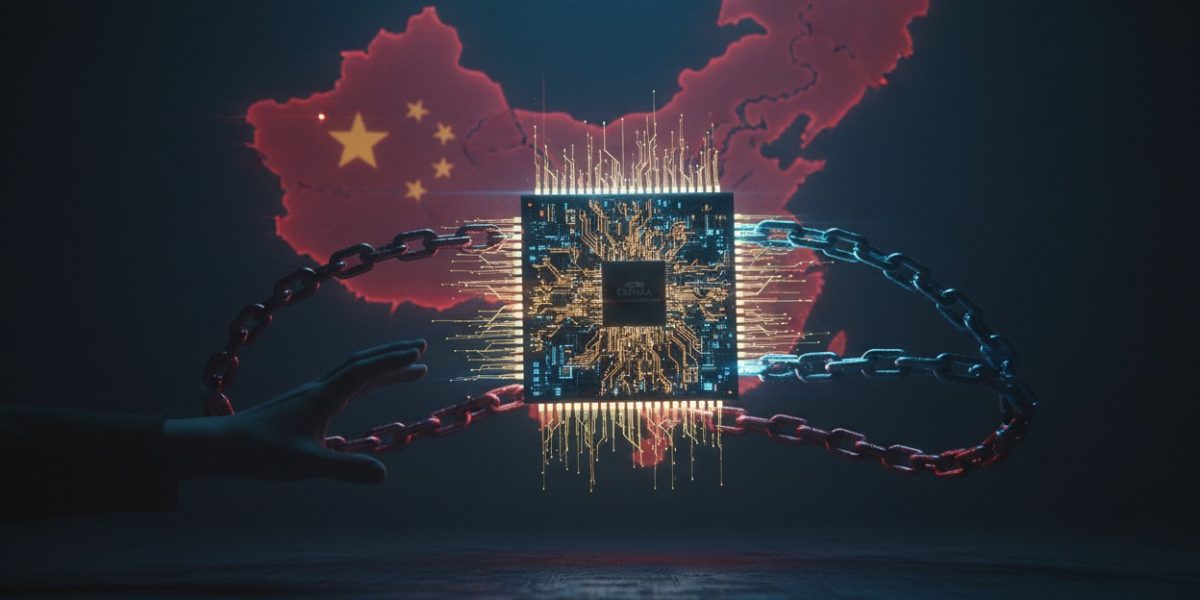
Nvidia’s China Sales Hit Hard by New U.S. Export Restrictions
Nvidia, the world’s leading maker of graphics processing units (GPUs), has some tough news: the US government is about to make it harder for the company to sell its cutting-edge AI chips to China. That’s right, the US Department of Commerce has just issued new rules that will restrict Nvidia’s sales of these high-end chips, effectively escalating the ongoing technology export controls between the two countries.
The move comes as tensions between the US and China continue to rise, with the Biden administration increasingly cracking down on Chinese access to advanced technologies that could aid its military or surveillance capabilities. By restricting Nvidia’s sales, the US Department of Commerce is essentially saying: “you can’t sell that stuff to China, folks.”
What Does This Mean for Nvidia?
For Nvidia, this is a significant blow. The company has long relied on China as a major market for its high-end GPUs, which are crucial for AI and machine learning applications. The restrictions will likely force Nvidia to rethink its sales strategy and possibly even reorganize its business to comply with the new rules. This could impact not just Nvidia’s bottom line but also its relationships with Chinese customers.
Nvidia has already expressed concerns about the impact of these restrictions, citing the challenges they pose to its ability to service existing customers in China. With its shares already under pressure, this latest development could see Nvidia’s stock take a hit.
The Broader Implications
Beyond the implications for Nvidia, these restrictions have wider consequences for the global tech landscape. As the US and China engage in an increasingly heated tech rivalry, expect more companies to find themselves caught in the middle. This includes other major chipmakers like AMD and Intel, which will also have to navigate the complex web of export controls to avoid falling afoul of US regulations.
This is a clear indication that the US is serious about limiting China’s access to advanced technologies that could be used for military purposes. Whether this will ultimately lead to a more balanced tech landscape remains to be seen, but one thing is sure: the tech industry is about to get a whole lot more complicated.