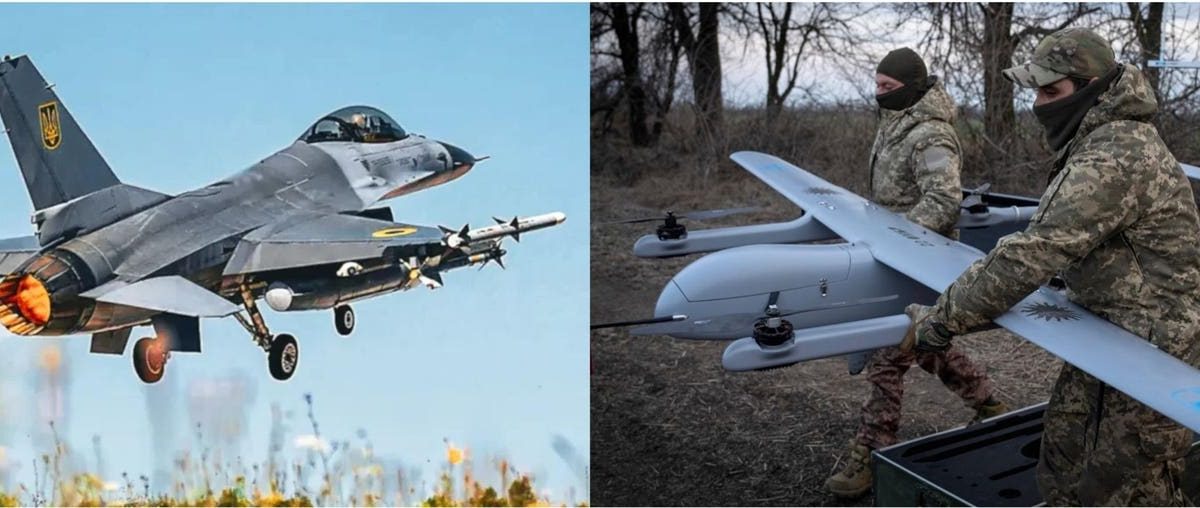
Airpower’s true measure lies in the effects it creates, not the planes that deliver it.
Integrating manned and unmanned systems, Ukraine is demonstrating a powerful asymmetric advantage that every security leader should understand.
More Bang for the Buck
Airpower isn’t just about the number of aircraft or their individual capabilities. It’s about the combined effect they have on the battlefield. This is exactly what Ukraine’s been doing by integrating manned and unmanned systems, and it’s paying off in a big way. By pairing crewed fighters with uninhabited aircraft, Ukraine is creating a potent synergy that allows them to attack more targets with greater precision and speed.
This tactic has allowed Ukraine to outmaneuver Russian forces, exploiting their weaknesses and taking a toll on their supply lines and command structures. The results speak for themselves: Ukraine’s airpower has been instrumental in pushing back against Russian advances and protecting its own territory.
Ukraine’s Asymmetric Advantage
Ukraine’s integration of manned and unmanned systems has created an asymmetric advantage, allowing them to punch above their weight on the battlefield. This is exactly what the US military has been doing with its own MQ-9 Reaper drones, which have been instrumental in supporting ground operations in Iraq and Afghanistan.
Ukraine’s success story is a testament to the power of integrating manned and unmanned systems. By leveraging the respective strengths of each, they’re able to achieve a level of airpower that would be impossible with just one or the other.
What this means
The implications of Ukraine’s success are far-reaching, and not just for military strategists. The integration of manned and unmanned systems can have a significant impact on the way we design and deploy airpower, and the way we think about defense in the 21st century.
In short, Ukraine’s showing us that airpower is not just about the technology or the platforms that deliver it – it’s about the effects it creates on the battlefield. That’s a lesson that every security leader should be taking to heart, and one that will shape the future of military operations for years to come.