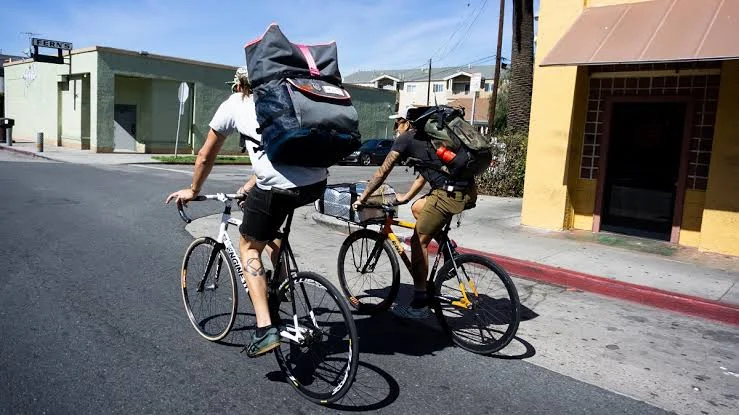
Nigeria’s Cities Are Reclaiming Their Roads with Bicycle Couriers
Rising fuel prices have sparked a surprising trend in Nigeria: the resurgence of bicycle couriers in urban areas. Once considered an old-fashioned mode of transportation, bicycles are now being hailed as a sustainable and efficient solution for last-mile delivery.
The increasing cost of fuel and worsening traffic congestion have made it harder for traditional courier services to operate. E-commerce, on the other hand, is booming in Nigeria, with online shoppers demanding fast and reliable delivery options. This perfect storm has led to a surge in bicycle courier services, which are perfectly positioned to capitalize on the growing demand for speed and efficiency.
A Green Alternative to Traffic-Gridlocked Cities
Bicycle couriers are not just a nostalgic throwback to the past; they’re a response to the harsh realities of Nigeria’s urban environment. With fuel prices rising and traffic congestion getting worse, it’s becoming increasingly difficult for traditional courier services to deliver packages on time. Bicycles, however, can weave through congested streets with ease, making them an attractive option for delivery companies looking to reduce costs and improve efficiency.
What this means
The rise of bicycle couriers in Nigeria’s cities has significant implications for the urban logistics landscape. With the adoption of more sustainable and efficient delivery methods, cities like Lagos and Abuja may see a reduction in air pollution and traffic congestion. For consumers, this means faster and more reliable delivery options, which will only continue to improve with the growth of e-commerce in Nigeria.
The resurgence of bicycle couriers in Nigeria is a testament to the power of innovation and adaptability in the face of adversity. As cities continue to grapple with the challenges of traffic congestion and environmental degradation, it’s clear that bicycle couriers are here to stay – and they may just be the key to unlocking a more sustainable and efficient urban logistics landscape.