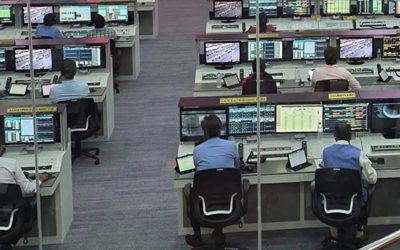
The FAA just handed over a whopping $875 million to Air Space Intelligence, a company that’s going to help them build out a cutting-edge air traffic control system. The contract, which spans 12 years, is a major push towards modernizing air traffic control, with a focus on using software and AI to make the process safer and more efficient.
A Modernized Command Center
The new system, which will act as the technological backbone of the Air Traffic Control System Command Center, promises to bring some much-needed upgrades to the US aviation system. It will enable real-time data sharing, automation of routine tasks, and better decision-making for air traffic controllers, all thanks to the power of artificial intelligence.
The system is designed to improve the way controllers manage air traffic, especially during peak periods when planes are converging on busy airports. By automating tasks like predicting air traffic flow and identifying potential conflicts, the system should be able to reduce delays and make the air travel experience smoother for passengers.
AI at the Helm
The contract includes the deployment of a state-of-the-art AI system that will analyze vast amounts of data in real-time, making it possible to predict potential problems and prevent them from happening. This AI system will be trained on large datasets and will be continuously learning and improving over time, ensuring that air traffic controllers have the best possible information to make informed decisions.
The system’s AI capabilities will also enable predictive analytics, allowing air traffic controllers to anticipate and prepare for potential issues before they arise. This should lead to fewer delays, reduced fuel consumption, and lower emissions, all of which are major pluses for the environment and the airline industry.
What This Means
The FAA’s investment in this new system is a significant step towards modernizing air traffic control and making it safer and more efficient. By leveraging the power of AI and software, the agency is able to reduce the risk of human error and make the air travel experience better for everyone involved. While the $875 million price tag might seem steep, the potential benefits in terms of reduced delays, lower emissions, and improved safety are well worth it.