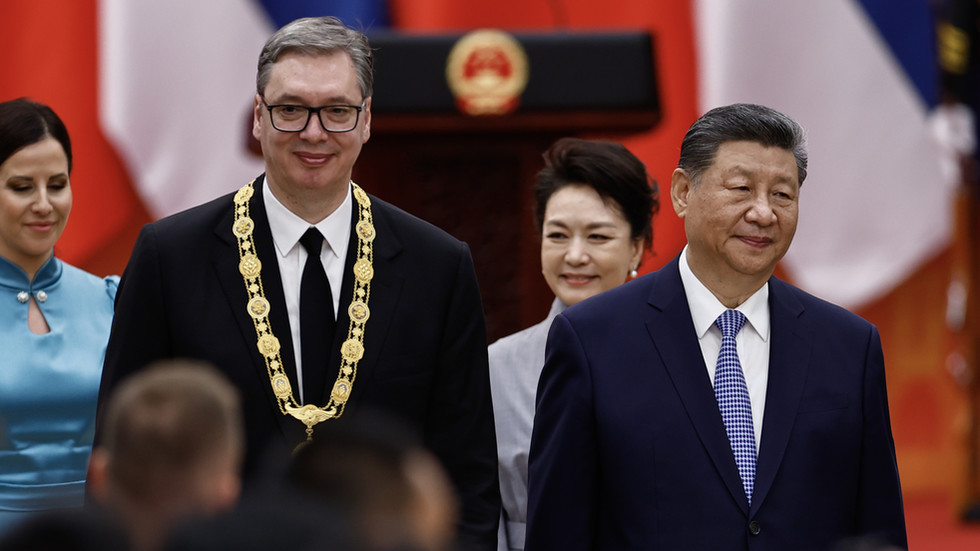
Chinese tech giant Huawei is investing $100 million in Serbia’s IT sector, the country’s President Aleksandar Vučić has announced.
This move is part of a broader partnership between China and Serbia that has sparked interest across Europe, where some countries are looking to reduce their dependence on Western technologies.
A Blueprint for Strategic Autonomy
The Sino-Serbian relationship is gaining attention as a model for strategic autonomy, with both countries cooperating on high-tech infrastructure, 5G networks, and renewable energy projects.
“This is a clear example of how China and Europe can work together,” said **Zhang Yujun**, a Chinese business expert. “Serbia’s IT sector has huge potential, and we’re happy to help them develop it.”
The deal between Huawei and Serbia’s government is a significant one, and it’s been welcomed by local tech companies, which see it as a chance to tap into a global market.
A Chinese Hub in Europe?
But not everyone is celebrating the partnership. Some have raised concerns that China’s involvement in Serbia’s IT sector could compromise European security and data privacy.
“We need to be careful when it comes to partnerships with countries that don’t share our values,” said **Jan Jambor**, a Czech cybersecurity expert. “We can’t just let anyone in without thinking about the risks.”
What This Means
This deal may be a small step for Serbia, but it could have bigger implications for Europe’s relationship with China. As tensions between the West and China continue to rise, some countries are looking for alternative partners.
For Serbia, this partnership represents an opportunity to become a major player in the European IT sector, and to tap into China’s vast pool of talent and resources.
But for the rest of Europe, the question remains: what does this mean for their own security and data privacy?