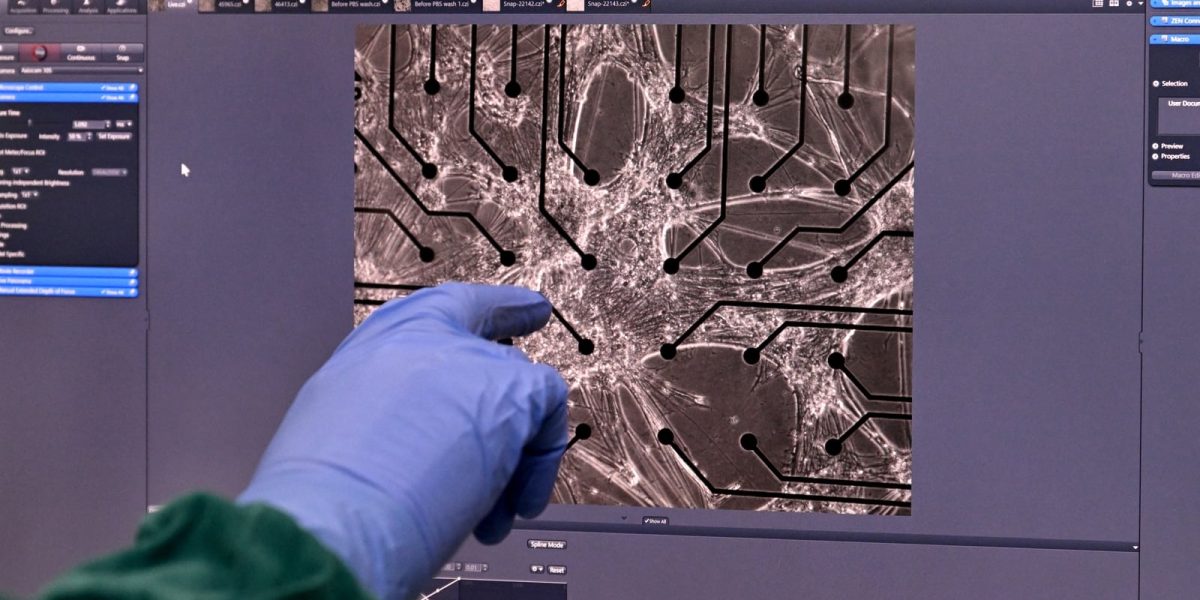
Australian researchers have managed to teach lab-grown brain cells to play the 90s shooter game ‘Doom’ on a silicon computer chip. This achievement marks a significant step in the field of neurotechnology, as it showcases the potential of artificial synapses to mimic human brain function.
Brain-Computer Hybrids on the Rise
The research team, led by Prof. David E. Williams at the University of Queensland, has been working on developing artificial neural networks using brain cells grown on a silicon chip. By combining the unique properties of brain cells with the precision of computer chips, they’ve created a hybrid system that can learn and adapt in response to its environment.
According to the researchers, the lab-grown brain cells were able to learn and master the basic controls of ‘Doom,’ including movement and weapon use. However, the neural network struggled to navigate the game’s complex levels and defeat high-level enemies.
This is just the beginning of the researchers’ experimentation with their brain-computer hybrids.
What This Means
This breakthrough has significant implications for the development of artificial intelligence and neurotechnology. By teaching brain cells to perform complex tasks like playing a video game, researchers may be able to unlock new ways of understanding and replicating human cognition. This could ultimately lead to advancements in areas such as prosthetics, robotics, and even personalized medicine.
While the possibility of developing “brain-controlled” robots or prosthetics may seem like the stuff of science fiction, this research is bringing us one step closer to making that a reality. As researchers continue to push the boundaries of what’s possible with artificial synapses, we can expect to see increasingly sophisticated applications of brain-computer hybrids in the years to come.
The Next Frontier in Neurotechnology
The potential applications of this technology are vast, and the research team is eager to explore them further. As they continue to study and develop their brain-computer hybrids, we can expect to see significant advancements in our understanding of the human brain and its capabilities.