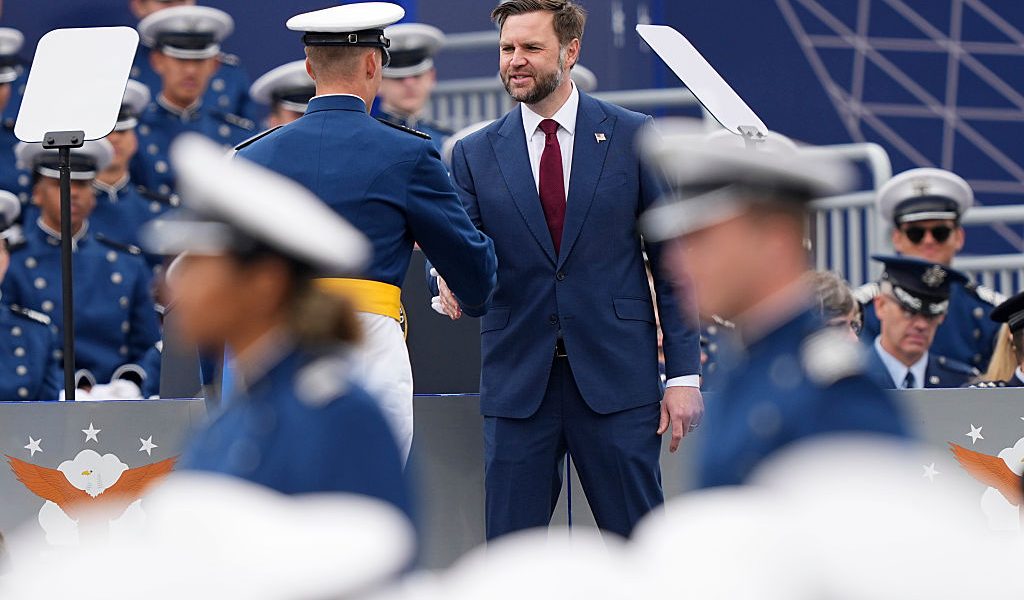
Vice President JD Vance has echoed the sentiments of Pope Leo XIV, cautioning against allowing machines to make decisions about life and death in modern warfare.
The warning was delivered at the U.S. Air Force Academy graduation ceremony on May 28, where Vance urged the graduates to harness technology to augment their capabilities, but not to compromise their judgment.
AI’s role in warfare
The growing use of artificial intelligence (AI) in military operations has sparked intense debate about its potential benefits and risks. AI can analyze vast amounts of data, identify patterns, and make decisions at speeds that far surpass human capabilities. However, this has also raised concerns about the potential for AI systems to make life-or-death decisions without human oversight.
Vance’s comments reflect a growing unease among some policymakers about the rapid advancement of AI in military contexts. They’re concerned that AI systems, while efficient and effective, may lack the nuance and empathy required to make complex moral decisions.
Prioritizing human judgment
Vance’s message to the Air Force Academy graduates was clear: technology should be used to enhance human capabilities, not replace them. He emphasized the importance of human judgment and decision-making in complex situations, where context and subtlety are essential.
This approach aligns with the values of the U.S. military, which emphasizes the importance of human leadership and decision-making in high-pressure situations. By prioritizing human judgment, Vance and other policymakers aim to prevent AI systems from making decisions that could have unintended consequences, such as civilian casualties or unintended escalations.
What this means
AI development will be more cautious: Vance’s comments reflect a growing recognition of the need for more careful development and deployment of AI systems in military contexts. This could lead to slower adoption of AI technologies, or more stringent requirements for human oversight and review.
Military leaders will prioritize human training: To ensure that human decision-makers can make effective use of AI tools, military leaders will likely prioritize training programs that focus on critical thinking, decision-making, and ethical reasoning. This will help military personnel to develop the skills they need to make informed decisions in complex, high-pressure situations.