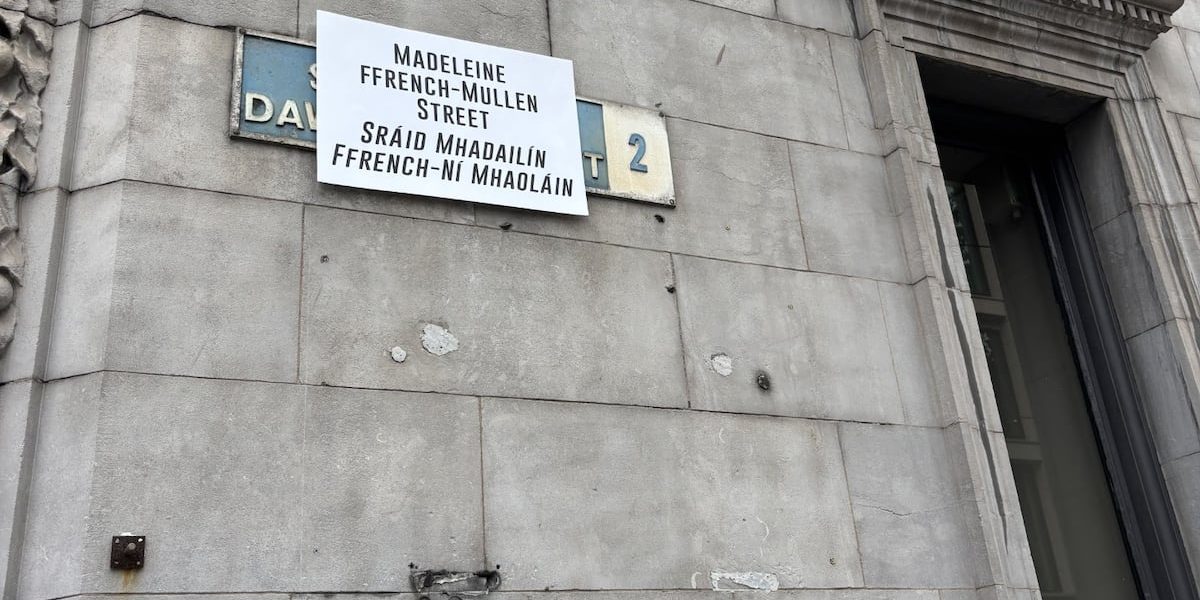
Dublin council officials are quietly removing street signs in the city that were temporarily rebranded last month as part of a campaign to rename streets with colonial links.
The Lasair Dhearg group, behind the initial cover-up, claims the move is a strategic part of their broader effort to ‘decolonise’ the city’s infrastructure.
Colonial Legacy in Dublin’s Streets
Lasair Dhearg’s campaign aimed to draw attention to streets named after figures with ties to colonialism, such as Dawson Street, which honours a British colonial administrator. However, the group’s approach to using makeshift white placards to cover up existing street signs sparked controversy and accusations of vandalism.
While some applauded the group’s message, others saw the action as an overstep, arguing that renaming streets without official approval undermines democracy and civic process. Now, Dublin City Council seems to be taking a cautious approach by removing the temporary signs, rather than addressing the deeper issues of colonialism and representation.
Council’s Decision
Representatives from Dublin City Council have not publicly commented on the removal of the signs, but sources close to the situation suggest that it’s a practical measure to restore order to the streets and maintain public safety.
The city council’s action won’t address the core issue of colonial legacies in Dublin’s infrastructure, and Lasair Dhearg is expected to continue their campaign, potentially through other means.
What this means
The quiet removal of the signs highlights the challenges of navigating sensitive historical and cultural issues in the public sphere. It underscores the need for inclusive and participatory decision-making processes to address colonial legacies and promote social justice.
Ultimately, the controversy surrounding street signs in Dublin serves as a reminder that even seemingly minor symbols can hold significant emotional and cultural weight, and that inclusive dialogue and consensus-building are essential for creating a more equitable and representative public space.