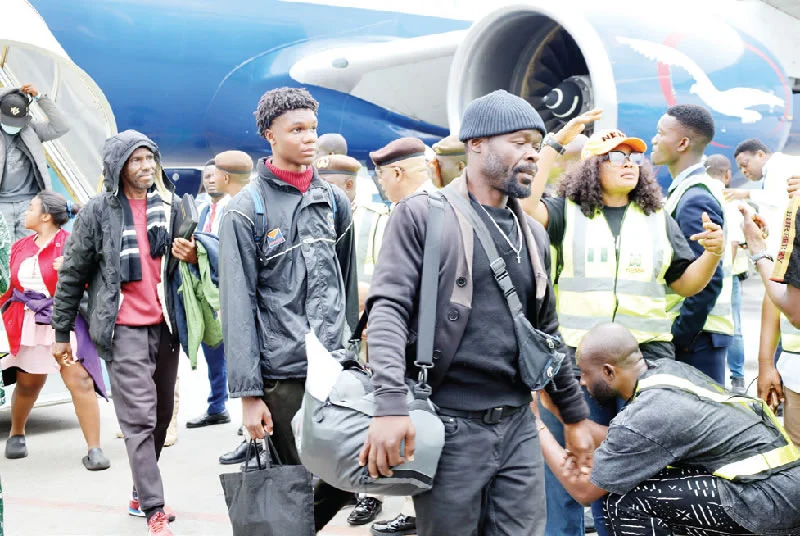
Thousands of Nigerians fled South Africa in 2020, escaping a wave of xenophobic violence that left dozens dead and hundreds more displaced.
Xenophobia in South Africa: A Harsh Reality
Two Nigerians, **Afolabi** and **Adekunle**, are among those who managed to escape the chaos. We spoke with them about their experiences, and the challenges they’re now facing back in Nigeria. “It was a nightmare,” Afolabi said, recalling the days leading up to his evacuation. “I was forced to flee my home, leaving behind everything I owned. We were beaten, harassed, and humiliated by the locals.”
Adekunle echoed Afolabi’s sentiments, describing the xenophobic attacks as “systemic and brutal.” Both men spoke of the difficulties they faced in getting their documentation sorted out, which hindered their ability to access basic services. “It was a bureaucratic nightmare,” Adekunle said. “They would ask for documents, and I’d give them the documents. Then they’d ask for something else, and it was a never-ending cycle.”
The financial hardship was another significant challenge the returnees faced. Many lost their jobs, while others saw their businesses destroyed. “I had to sell my car just to make ends meet,” Afolabi said. “It was a desperate time, and I thought I was going to lose everything.”
Rebuilding Lives in Nigeria
Despite the trauma they experienced, both men are determined to rebuild their lives in Nigeria. They’re eager to put their skills to use, but face significant barriers. “It’s not easy,” Adekunle said. “We’ve got to start from scratch, and it’s a daunting task. But we’re willing to work hard and make a new life for ourselves.”
Afolabi and Adekunle are not alone. Many other returnees are struggling to make a fresh start in Nigeria. With the right support, there’s a chance for them to not only rebuild their lives but also contribute to the growth and development of their communities.
What This Means
The xenophobic attacks in South Africa exposed a darker side of human nature, but they also highlighted the resilience and determination of those affected. The challenges faced by **Afolabi** and **Adekunle** serve as a reminder of the importance of creating safe spaces for people to live and work without fear of persecution.