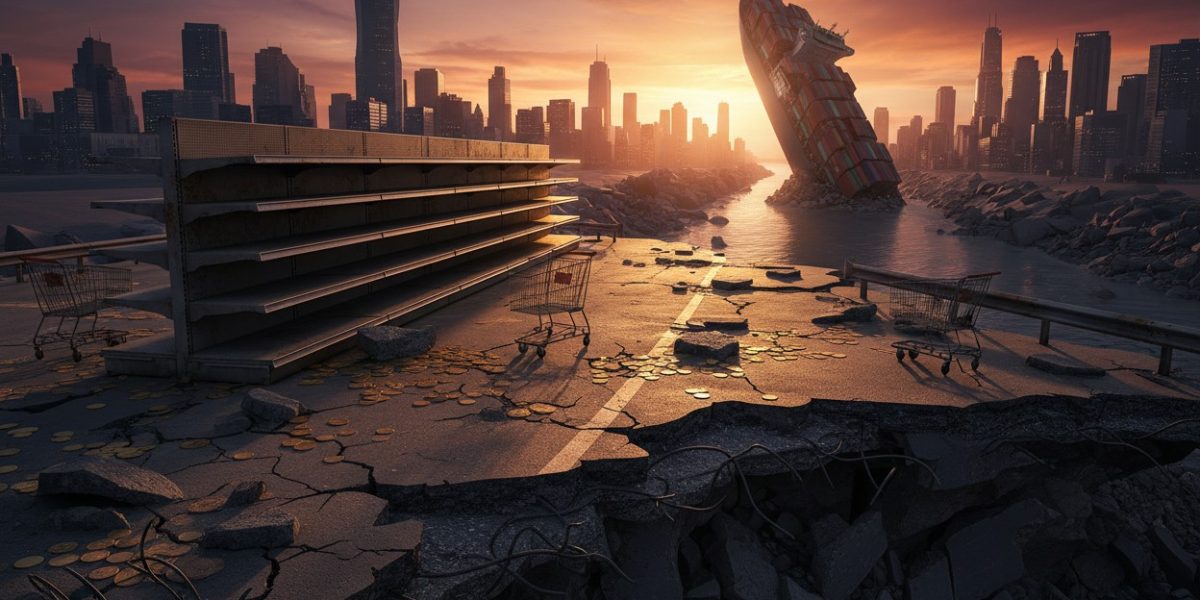
The world’s infrastructure has already begun to show the strain of climate change, overpopulation, and dwindling resources – we’re not just talking about melting glaciers and parched crops; the global economy’s fragile foundation is on the brink of collapse.
Avoiding the Unthinkable
Most people are sleepwalking through this crisis, convinced that because problems have always been solved in the past, they will be solved again. But experts warn that the interconnectedness of modern life, along with the sheer scale and complexity of our problems, mean that this time it’s different. Climate scientist **Dr. Katharine Hayhoe** emphasizes that the window for action is rapidly closing.

What Does Collapse Mean?
When systems fail, it’s not just about the environment or economy – entire societies can unravel. Think of the collapse of ancient civilizations like the Mayans or the Roman Empire: as resources dwindled, social structures crumbled, and populations declined. It’s a grim reminder that even with all our technology and knowledge, human societies are fragile and vulnerable.
What this means: instead of looking to governments or corporations to save us, we need to take individual responsibility for our impact on the planet. This means reducing our consumption, investing in renewable energy, and supporting sustainable agriculture – every small action counts in the face of such monumental challenges.
Preparing for the Worst
While the prospect of civilizational collapse is bleak, experts say it’s not a foregone conclusion. By acknowledging the problem, working together, and making drastic changes to our lifestyles and economies, we might be able to avoid the unthinkable. But the window for action is indeed closing, and it’s high time for humanity to wake up and take responsibility for its own future.