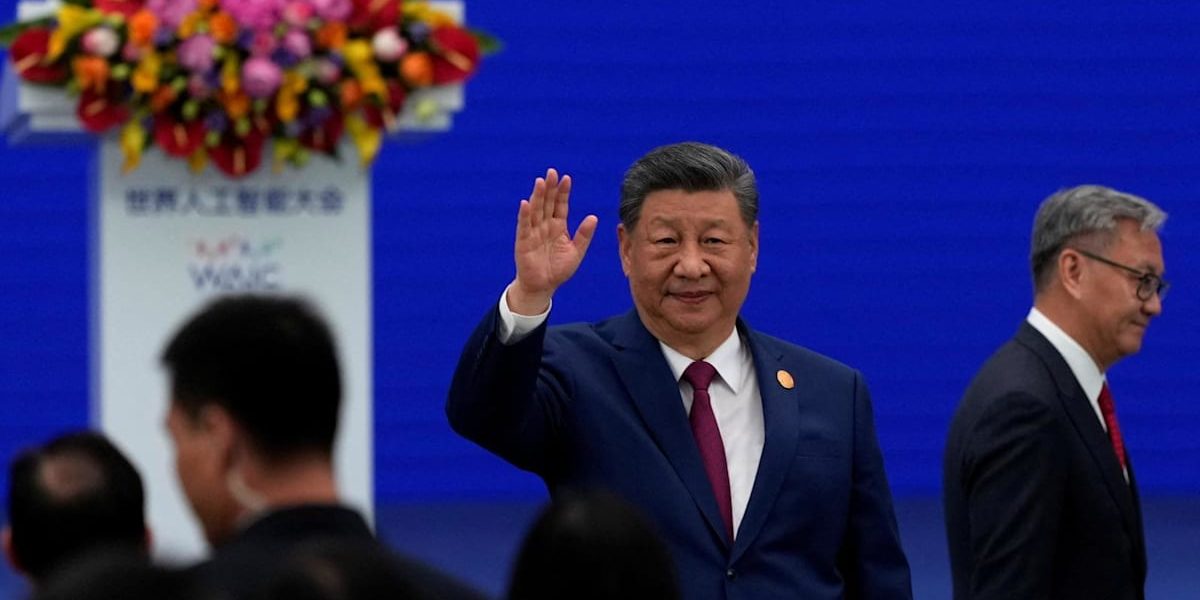
At the World Artificial Intelligence Conference (WAIC) in Shanghai, China’s President Xi Jinping delivered a clear message: AI shouldn’t be controlled by a single nation. “We should jointly oppose overstretching the national security concept in the field of AI or placing one country’s security over that of others,” he said.
The four-day WAIC, which wrapped up in mid-July, brought together more than 1,000 Chinese tech firms, along with officials, researchers, and industry figures. This gathering showcased over 3,000 products, from cutting-edge semiconductor systems to AI-powered robots and intelligent transportation systems. The sheer scale of innovation on display highlights China’s ambitions in the AI space.
A Global AI Powerhouse on the Rise
China has been aggressively investing in AI research and development, with the government committing billions to support the growth of the sector. The country’s AI industry has grown exponentially in recent years, with China now home to some of the world’s leading AI research institutions and companies. The likes of Baidu and Alibaba are already major players in the global AI landscape.
A Call for Global Cooperation?
Xi’s comments at WAIC suggest China may be looking to shift the narrative around AI from a competition-driven mindset to one of global cooperation. This could be a calculated move to mitigate the risks associated with the growing dominance of AI and ensure that its benefits are shared among nations. However, the notion of shared security in the AI space remains a contentious issue, with many nations still wary of China’s intentions in the sector.
What this means: Xi’s comments signal a potential shift in China’s stance on AI, from an emphasis on national security to a more collaborative approach. This could pave the way for greater international cooperation in AI research and development, but will also depend on the willingness of other nations to work together towards a common goal.