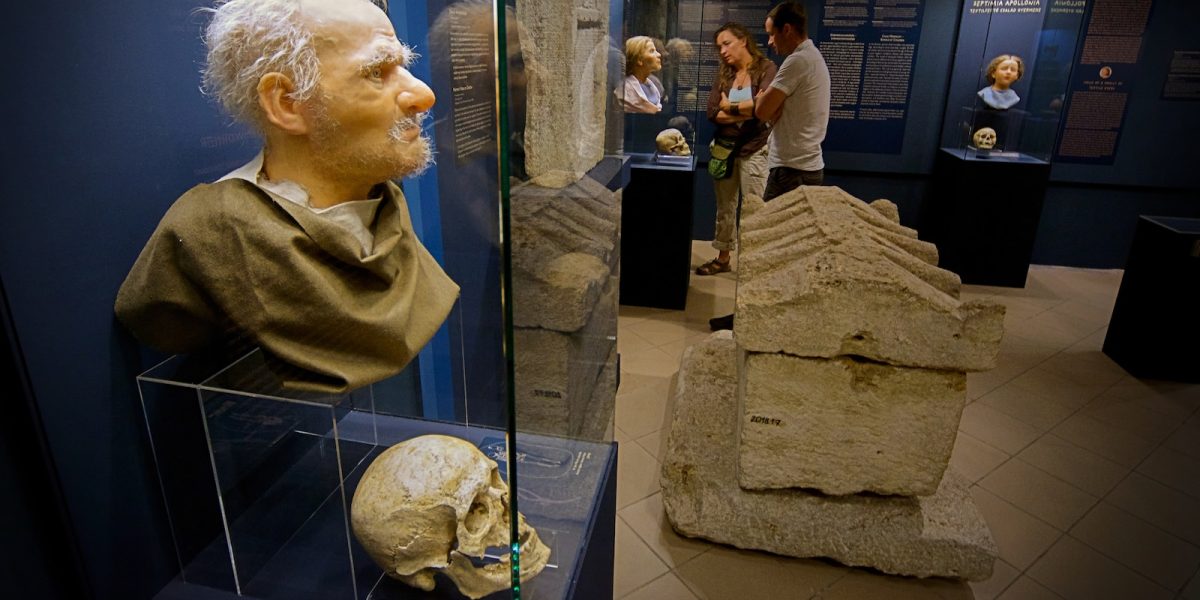
Using AI to recreate the faces of ancient Rome, a new exhibition in Budapest, Hungary, is giving voice to the forgotten residents of the Roman frontier city of Aquincum. The city, once a thriving metropolis, has left behind a wealth of archaeological artifacts that have been painstakingly analyzed to bring its inhabitants back to life.
Data-Driven Revivals
Researchers at Eötvös Loránd University in Budapest have employed AI and 3D modeling techniques to craft remarkably lifelike facial reconstructions from the remains of Aquincum’s residents. These revivals are based on the analysis of skeletal remains, including skulls, teeth, and facial bones. The goal is to create a more nuanced understanding of the people who once inhabited this ancient city.
The team, led by Dr. Kinga Árendás, a forensic anthropologist, used a combination of software and machine learning algorithms to reconstruct the faces. They drew on existing studies of facial morphology, as well as historical records and artistic depictions of ancient Roman people. The resulting reconstructions are remarkably realistic, with distinct features and expressions that belie their ancient origins.
What This Means
The impact of this exhibition extends beyond the realm of archaeology and art. By humanizing the faces of ancient people, researchers hope to foster a deeper connection between modern visitors and their ancestors. This can help us better understand the complexities of history and the people who lived through it. It’s also an opportunity for people to engage with the past in a more personal and relatable way.
As we gaze upon the faces of Aquincum’s residents, we’re reminded that history is made up of individual stories and lived experiences. By reviving the faces of the past, we’re given a glimpse into the lives and struggles of people who were once mere artifacts, now transformed into flesh-and-blood individuals. It’s a testament to the power of AI and the importance of rehumanizing the past.
Art and Science in Harmony
While AI and 3D modeling may seem like a departure from traditional artistic techniques, they’ve allowed the team to produce remarkably accurate and detailed facial reconstructions. The collaboration between art and science has resulted in a unique exhibition that’s both visually stunning and historically significant.
The exhibition at the Budapest History Museum will run through September 2024, offering visitors a chance to encounter the faces of ancient Aquincum’s residents. It’s an opportunity to step into the past, to meet the people who once lived in this ancient city, and to gain a deeper understanding of the complex history that has shaped our world.