Scientists at Harvard Medical School have made a significant breakthrough in DNA editing technology, using an enzyme called adenosine deaminases acting on RNA (ADAR) to precisely edit adenine bases in mammalian DNA.
A New Tool for DNA Editing
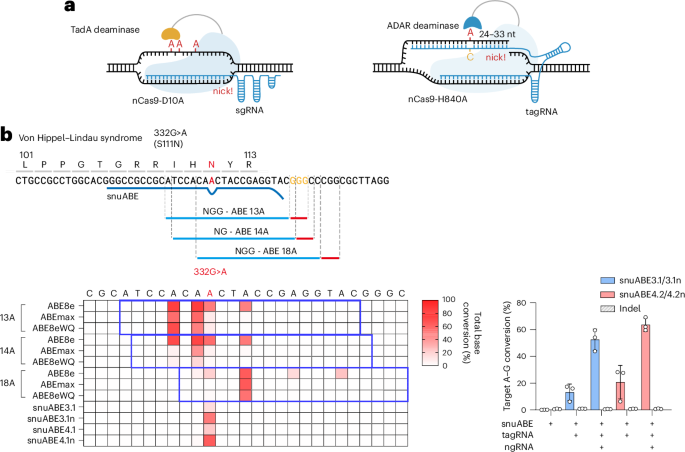
The team developed a tool called snuABE, which harnesses the power of ADAR and customized guide RNAs to convert adenine bases to other DNA bases with single-nucleotide precision. This level of precision is crucial for correcting genetic mutations that cause inherited disorders.
The ADAR enzyme is responsible for editing RNA, but the researchers found a way to repurpose it for DNA editing. They designed snuABE to work by first cutting the target DNA sequence using a guide RNA, and then using ADAR to convert the adenine base into another base.
Advantages Over Existing Methods
Existing DNA editing tools like CRISPR-Cas9 can introduce unwanted side effects, such as large DNA deletions, which can disrupt the functioning of nearby genes. A recent study published in Nature Biomedical Engineering found that base editors and prime editors, which are types of gene editors, can cause large DNA deletions at a rate of 20 times lower than CRISPR-Cas9.
The new snuABE tool has the potential to minimize these side effects, allowing for more precise and efficient editing of the human genome. This could have significant implications for the treatment of genetic disorders.
What This Means
The development of snuABE represents a major breakthrough in the field of gene editing, offering a new tool for precision medicine. If further research and testing confirm its safety and efficacy, snuABE could revolutionize the way we approach genetic disorders, enabling more targeted and effective treatments.