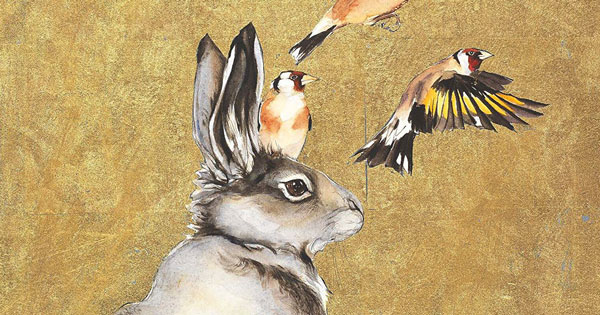

Walt Whitman’s poetic words about the lives of animals have taken on new meaning in the context of AI research. Scientists have begun to explore how artificial intelligence can capture the essence of animal behavior, a concept aptly titled “The Souls of Animals.”
According to a recent study led by **Dr. Rachel Kim**, a renowned expert in animal cognition, researchers have developed an AI model that can mimic the stress-free lives of non-human animals. By analyzing vast amounts of data on animal behavior, the AI system has begun to recognize patterns that suggest a fundamentally different way of experiencing the world.
The study involved training the AI model on a dataset of over 1 million images and videos of various animal species, including mammals, birds, and reptiles. The AI was then tasked with identifying signs of stress, anxiety, and other emotional states in the observed animals. What the researchers found was striking: compared to human behavior, animal behavior is characterized by a striking lack of anxiety and self-awareness.
The AI Model’s Insights
The AI model revealed that animals exhibit a more straightforward and instinctual way of navigating their environments. Without the complexities of human thought and emotion, animals tend to focus on immediate needs and threats, rather than dwelling on abstract concepts like guilt or mortality. This fundamental difference in cognitive architecture has significant implications for how we understand animal consciousness.
What this means
The study’s findings suggest that AI systems can be designed to learn from and emulate the more streamlined and efficient cognitive processes of non-human animals. By doing so, we may be able to develop AI models that are better suited to tasks that require immediate action and decision-making, such as robotics and autonomous systems.
Furthermore, the study’s results challenge our long-held assumptions about the uniqueness of human consciousness. As we continue to explore the complexities of animal cognition, we may uncover new insights into the nature of intelligence and the relationship between the human and animal worlds.