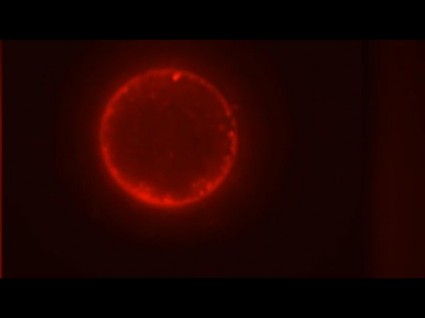
Meet SpudCell, the world’s first artificially created cell that can replicate itself from start to finish. This tiny synthetic being is a marvel of modern science, born from a combination of DNA and a cleverly designed genetic system.
The Birth of SpudCell
The team of scientists behind SpudCell consists of Jennifer Doudna and George Church, two of the most influential names in synthetic biology. Together, they have made a breakthrough in creating a cell capable of undergoing the entire life cycle – from cell division to cell death.
SpudCell uses a novel approach, combining a bacteriophage (a virus that attacks bacteria) with a cell from the genus Escherichia (commonly known as E. coli). By engineering this system, the researchers achieved a remarkable level of complexity in their synthetic cell, demonstrating that it can indeed thrive and reproduce.
The Potential Impact
The implications of SpudCell are vast and far-reaching, promising to revolutionize our understanding of life, health, and technology. This breakthrough may pave the way for innovations in disease treatment, gene editing, and synthetic biology – areas where scientists have been searching for new ways to engineer living systems.
With SpudCell, researchers can now explore more possibilities in designing life, potentially creating synthetic organisms tailored to address specific problems or applications. The potential to engineer living solutions to pressing issues, such as climate change, is immense.
What This Means
So, what does SpudCell mean for the average person? It means that scientists are one step closer to designing life to solve real-world problems. The breakthrough also underscores the rapid advancements in synthetic biology and gene editing technologies, which could lead to improved medical treatments and treatments for diseases.
While the full extent of SpudCell’s potential is still being explored, one thing is clear: this synthetic cell marks a significant milestone in our understanding of life’s fundamental building blocks. As researchers continue to push the boundaries of what’s possible, we can expect to see more groundbreaking developments in the years to come.