Wildfire Risk Just Got a Lot Easier to Measure
Technosylva, a company that specializes in wildfire science, has just released a new tool designed to predict and communicate fire danger levels in unprecedented detail. The new system, created in collaboration with experts in the field, promises to simplify complex data and provide clear, actionable insights for utilities, emergency responders, and communities nationwide.
A New Language for Wildfire Risk
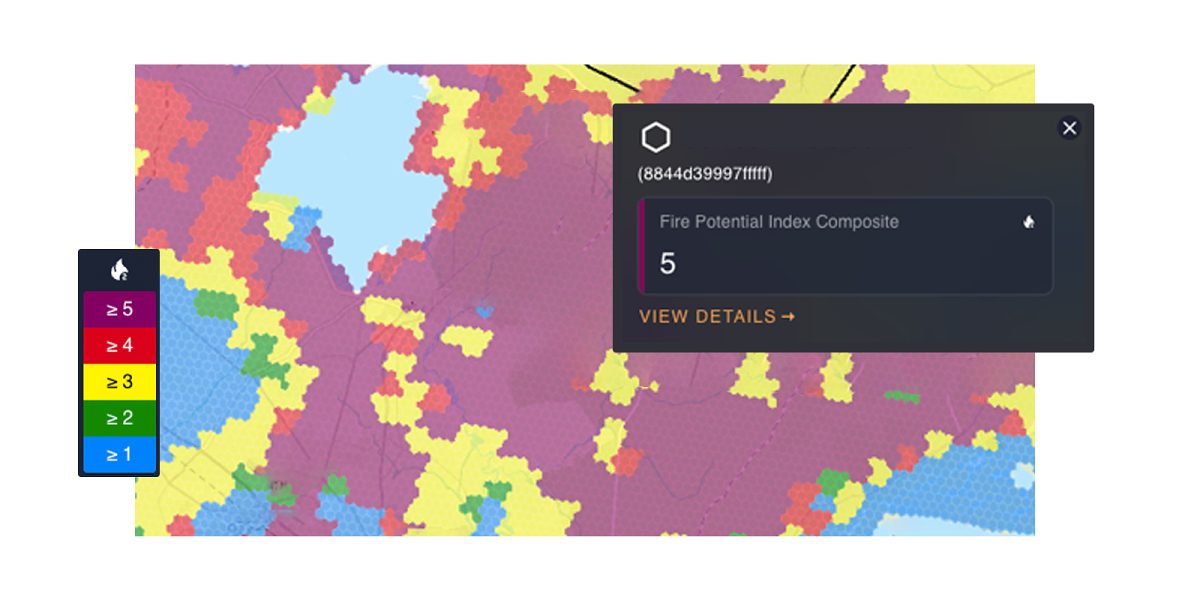
The current system for assessing wildfire risk is often based on broad, regional metrics that fail to account for the unique characteristics of individual fires. Technosylva’s new tool, on the other hand, uses advanced algorithms and machine learning techniques to generate highly localized, minute-by-minute ratings of fire danger. These ratings are displayed on a simple color-coded scale, making it easier for decision-makers to plan and respond to emerging threats.
The system’s creators have tested their new tool against real-world data, with impressive results. By analyzing past fires and comparing the predictions generated by their system to actual fire behavior, they’ve shown that their tool can accurately forecast fire danger up to several hours in advance. This allows utilities and emergency responders to take targeted, highly effective measures to protect communities and contain fires before they spread.
Protecting Communities with Better Data
What this means is that communities nationwide can now rely on more accurate, more actionable data to inform their wildfire preparedness and response strategies. By providing a clear, easy-to-understand picture of fire danger, Technosylva’s new tool empowers utilities and emergency responders to make more informed decisions, allocate resources more efficiently, and keep people and property safer.
Of course, no tool is foolproof, and there will always be some degree of uncertainty when it comes to predicting wildland fires. But by providing a more detailed, more realistic picture of fire danger, Technosylva’s new tool has the potential to save lives, reduce property damage, and make a real difference in the lives of people who live and work in fire-prone areas.