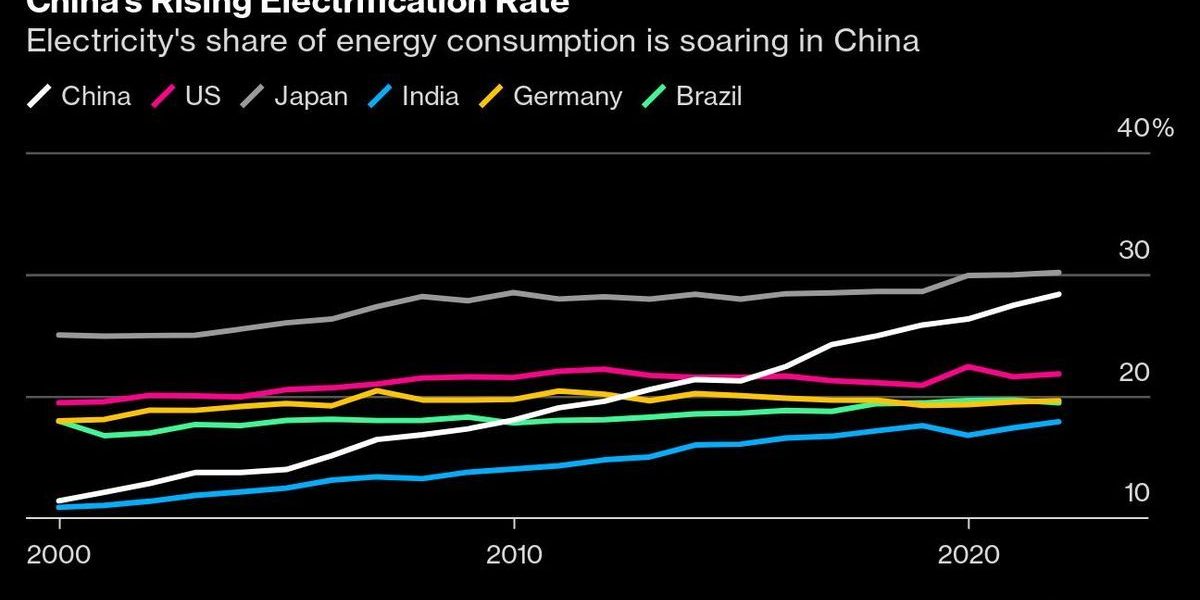
China’s Energy Demand Forecasting Hits a Snag
China’s government is struggling to predict energy demand due to the country’s rapid shift towards tech-driven industries and a changed economic landscape, according to a senior official.
The remarks from the top government official come as China’s economy undergoes a significant transformation, with tech growth playing a major role. The country’s tech sector is expanding at an unprecedented pace, with new industries like renewable energy, electric vehicles, and advanced manufacturing leading the charge.
However, this rapid growth is also throwing a wrench into the works for energy demand forecasting. According to the official, China’s energy consumption patterns are becoming increasingly difficult to predict, making it challenging for the government to accurately forecast demand. This, in turn, is making it hard to balance energy supply and demand, potentially leading to shortages or surpluses.
A key reason for this uncertainty is the changing nature of China’s economy. As the country’s tech sector grows, traditional industries like manufacturing and heavy industry are declining. This shift towards a more service-oriented and tech-driven economy is altering consumption patterns, making it harder to predict energy demand.
Rise of the Electric Vehicle
One area where this change is particularly pronounced is the electric vehicle (EV) sector. China is a global leader in EV production, with many major manufacturers like Tesla and BYD setting up shop in the country. As a result, energy demand for transportation is shifting towards electricity, rather than gasoline.
This is creating new challenges for energy demand forecasting, as traditional models based on fossil fuel consumption are becoming less relevant. Instead, policymakers are having to develop new models that take into account the changing nature of transportation energy demand.
What this means
What this means for consumers is a potentially more volatile energy market, with prices subject to greater fluctuations. For policymakers, it means a need to develop new strategies for balancing energy supply and demand, as well as investing in renewable energy sources to meet the changing needs of the economy.
One thing is clear, however: China’s energy demand forecasting challenges are unlikely to go away anytime soon, as the country’s tech sector continues to drive growth and change.
Source: Bloomberg