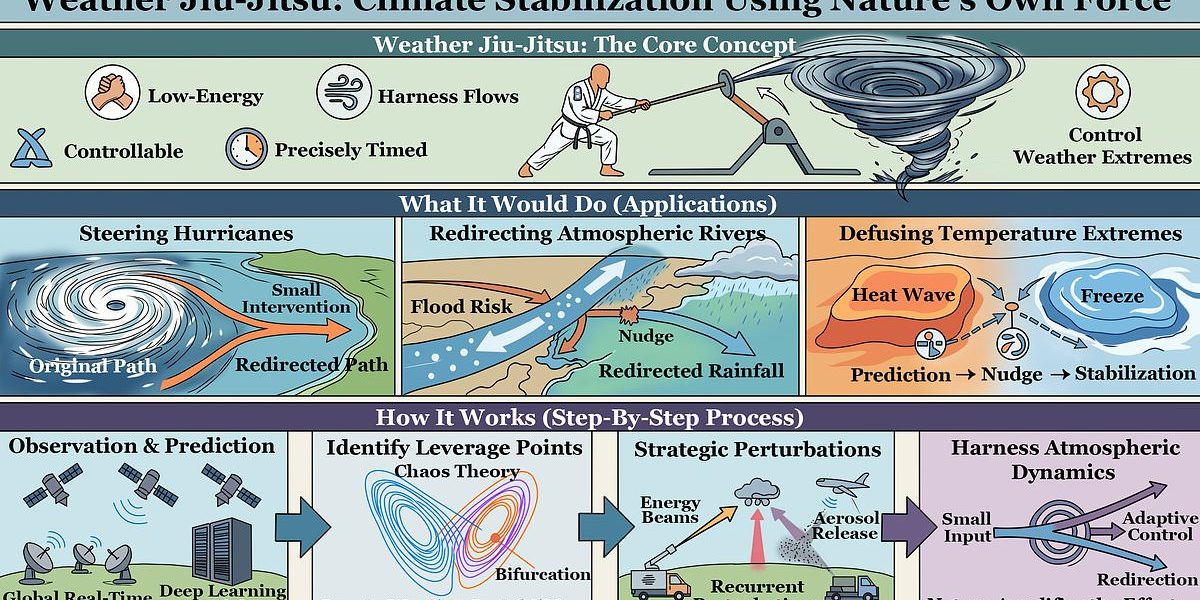
A team of researchers from Arizona State University has proposed a provocative new approach to mitigating the effects of extreme weather events: ‘Weather Jiu-Jitsu.’ Their goal is to “nudge” weather systems away from destructive paths, like heatwaves, but critics warn that such tactics may have unforeseen consequences.
Weather Jiu-Jitsu: How it Works
Weather Jiu-Jitsu involves using large-scale aerosol injections to manipulate the atmosphere and steer weather systems towards more favorable outcomes. This approach is based on the idea that seeding the atmosphere with specific particles can influence the trajectory of weather systems by altering the atmospheric circulation patterns.
The Controversy
The concept has sparked heated debate among experts, with some hailing it as a potential breakthrough and others warning of the risks involved. Critics argue that the technique is still largely untested and may have unintended effects on global climate patterns. They point to the fact that aerosol injections on a large scale could have unforeseen effects on regional ecosystems and even exacerbate certain types of air pollution.
Heatwave Relief?
The researchers behind Weather Jiu-Jitsu claim that their technique could provide a vital lifeline for communities facing extreme heatwaves. By “nudging” weather systems away from urban areas, they argue that it’s possible to reduce the risk of heat-related illnesses and deaths. However, many scientists remain skeptical, arguing that the technique should not be seen as a silver bullet for tackling heatwaves. “We need to focus on reducing greenhouse gas emissions and investing in robust climate-resilient infrastructure, rather than relying on unproven fixes,” says Dr. David Karoly, a leading climate scientist from the University of Melbourne.
What this means
The debate surrounding Weather Jiu-Jitsu serves as a stark reminder of the complexities and uncertainties involved in addressing extreme weather events. While the idea may seem like a potential solution to the problem of heatwaves, it’s essential to weigh the potential benefits against the risks and unknowns. As the world grapples with the consequences of climate change, it’s clear that a multifaceted approach is needed – one that prioritizes research, investment, and community resilience over unproven fixes.