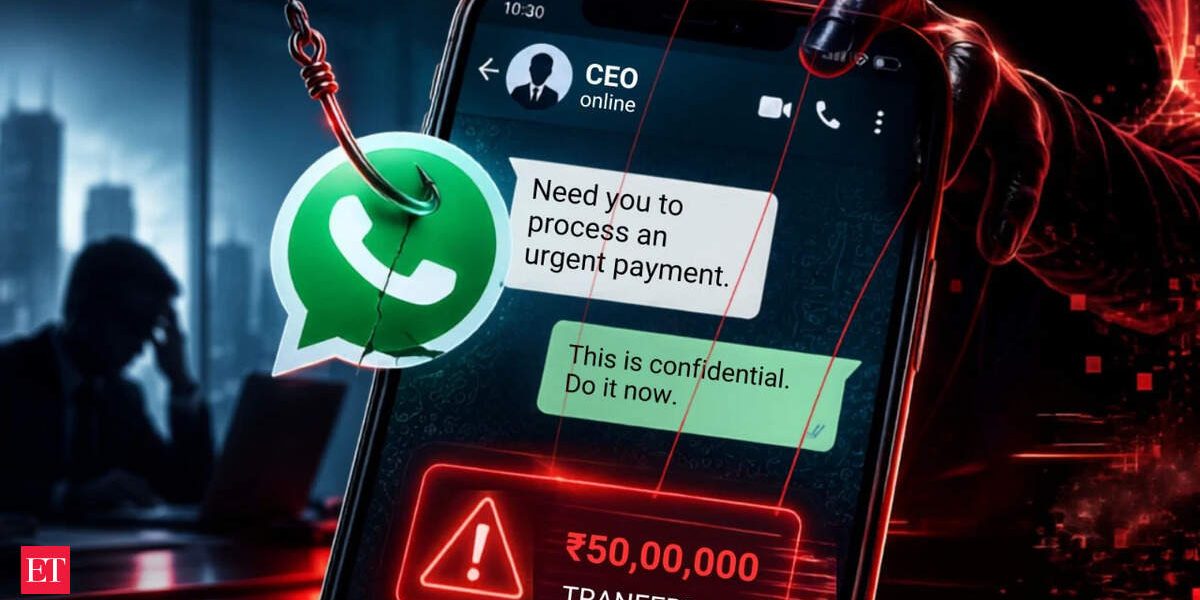
**Hackers Hijack CEOs’ WhatsApp Accounts to Pull Off ‘Boss Scam’**
Imagine receiving an urgent WhatsApp message from your CEO asking for a confidential payment that can’t wait. The message comes from their real account, carries all the authority of senior management, and seems too genuine to ignore. This is exactly what cybercriminals are exploiting with the ‘Boss Scam’, a sophisticated phishing attack targeting Indian companies.
The Boss Scam: A Phishing Attack with Executive Credibility
The scam begins when hackers compromise the WhatsApp account of a high-ranking executive, typically using social engineering tactics or exploiting vulnerabilities in the account’s security. Once in control, they use the CEO’s real name and profile picture to send urgent messages to employees, demanding confidential payments or access to sensitive information.
The messages often claim that the company is facing a financial emergency or a regulatory issue, and that immediate action is required to resolve the problem. Employees, unaware of the hack, may unwittingly comply with the request, leading to financial losses for the company.
Regulatory Threats and Malware: The Hook for Employees
The hackers use the credibility of their position to dupe employees into downloading malware that gives the attackers full access to the company’s financial systems. Alternatively, they might pose as regulators, forcing employees to make urgent payments to avoid penalties or fines.
What this means: Companies must educate employees on the importance of verifying requests, especially those that seem urgent or out of the ordinary, and implement robust security measures to protect high-ranking executives’ WhatsApp accounts.
The ‘Boss Scam’ highlights the growing sophistication of cyber threats and the need for robust cybersecurity measures, particularly in the corporate world.
As the scam continues to evolve and spread, it’s essential for companies to remain vigilant and take proactive steps to prevent such attacks. This includes implementing multi-factor authentication, conducting regular security audits, and educating employees on phishing tactics and social engineering attacks.