**SanDisk Turns to Chip Stacking to Overcome Memory Crunch**
A severe shortage of High-Bandwidth Memory (HBM) is crippling the rapid growth of the AI industry, and SanDisk is betting on a bold solution: stacking both NAND and compute on one chip.
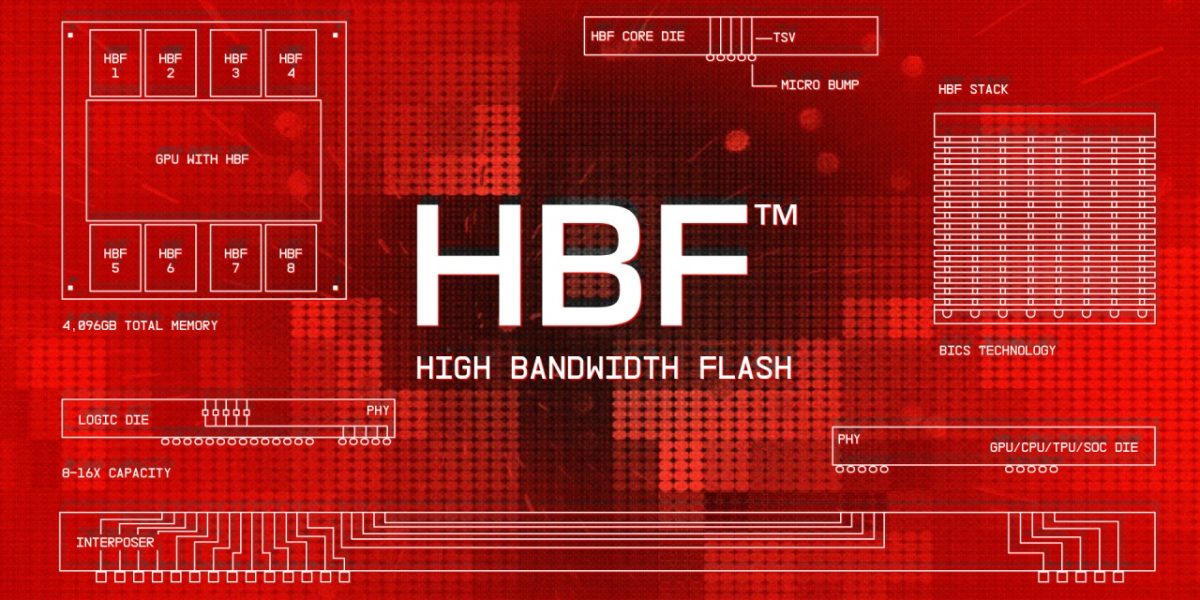
For years, HBM has been the go-to choice for high-performance applications like AI and machine learning, but its limitations are now biting back. As SanDisk’s executives acknowledge, the “rapid rise of AI and the proportional demand for compute has led to these shortages.” To address this issue, the company is looking to push the boundaries of what’s possible on a single chip, literally by stacking multiple layers of NAND and compute elements.
This radical approach, still in its infancy, could be a major breakthrough for AI developers who’ve been stuck by the scarcity of HBM. By integrating both memory and processing elements within a single chip, SanDisk hopes to create a more efficient and cost-effective solution.
**What this means**
For AI developers, this could be a breath of fresh air in a market where HBM shortages have driven up costs and reduced supply. No longer will they be forced to rely on traditional, bulky solutions that compromise on performance or efficiency. Instead, they’ll be able to tap into the speed and power of stacked NAND and compute, unlocking new possibilities for real-world applications.
**The Challenges Ahead**
However, SanDisk faces significant hurdles in bringing this technology to market. Not only must the company overcome technical challenges like signal integrity and power management, but it must also convince developers and manufacturers to adopt this radical new approach.
**A New Era for AI Hardware**
The implications of SanDisk’s stacked NAND and compute technology are far-reaching, and could redefine the landscape of AI hardware. As one of the industry’s leading players, SanDisk’s efforts could set a new standard for what’s possible in AI computing and accelerate innovation in fields like natural language processing, computer vision, and predictive analytics.