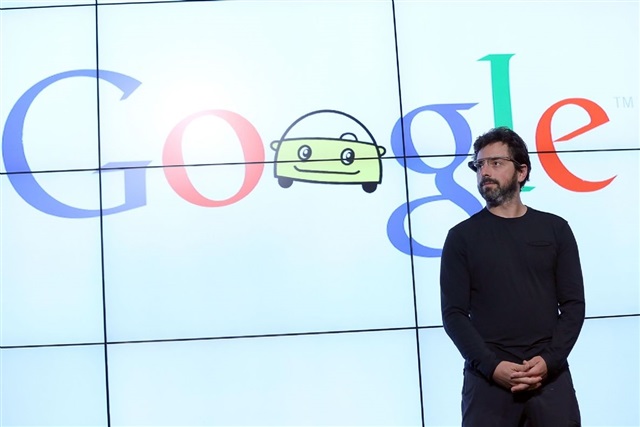
Sergey Brin, co-founder of Google, recently highlighted a critical limitation holding back the development of Artificial General Intelligence (AGI). At the AGI House event in Silicon Valley, Brin stated that the missing piece for achieving AGI isn’t improving language understanding, but rather integrating with the physical world.
Brin’s comments reflect the ongoing debate about what’s holding back AGI progress. Some experts argue that language models, the foundation of many modern AI systems, need more refinement to achieve human-like understanding. However, Sergey Brin is part of a growing group that thinks the real challenge lies in AGI’s ability to interact with and manipulate the physical environment.
AGI refers to an AI system capable of performing any intellectual task that humans can. The dream is to create a machine that can learn, reason, and apply its knowledge in a wide range of situations, much like humans do. Brin’s assertion that the physical world is the missing piece in AGI development aligns with recent advancements in robotics and sensor technologies.
Robotics and Sensory Perception
Brin emphasized the need for AGI systems to have a better understanding of their physical surroundings, which involves not only perceiving sensory inputs but also manipulating objects and interacting with the environment. This includes tasks like grasping, moving, and manipulating objects, as well as understanding the dynamics of physical systems. **This challenge is often referred to as the ’embodiment problem,’** where AI systems struggle to replicate human-like interaction with the physical world.
The Role of Robotics in AGI
One potential solution to this problem lies in the development of advanced robotics and sensor technologies. Researchers are working on creating robots that can learn and adapt to new situations, much like humans do. **The progress made in this area has already led to impressive applications in industries like manufacturing, healthcare, and logistics.** However, much work remains to be done before these systems can be integrated into a broader AGI framework.
Implications for AGI Development
Brin’s comments highlight the need for a more integrated approach to AGI development, one that addresses both language understanding and physical interaction. **What this means is that researchers will need to focus on developing AI systems that can seamlessly interact with the physical world.** This could involve the development of new robotic platforms, advanced sensor technologies, and more sophisticated integration with language models. As the AI community continues to push forward in this area, we can expect to see significant progress in the development of AGI systems capable of matching human intelligence and capabilities.