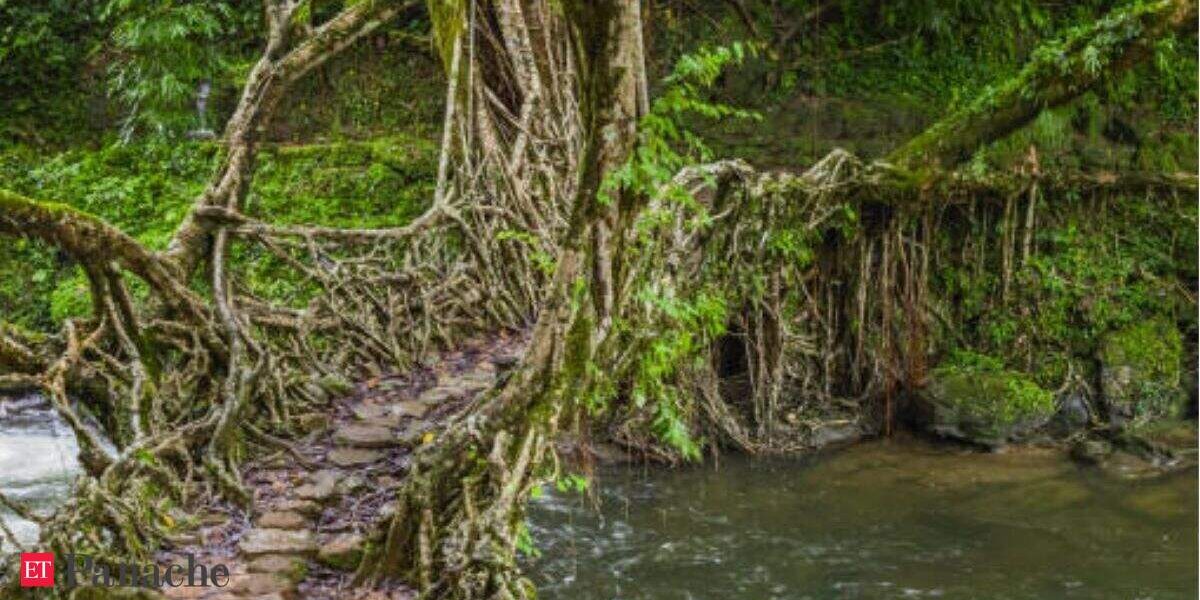
For the past 500 years, a small state in India has been quietly perfecting a unique form of bridge-building that’s got nothing to do with concrete, steel, or wood.
Meet the ‘Living Bridges’ of Meghalaya
The Khasi community in Meghalaya, a region nestled in the northeastern part of the country, has been crafting these remarkable structures from the roots of rubber fig trees. What makes these bridges truly remarkable is that they’re not just durable – they’re also self-strengthening.
Guided by generations of artisans, the Khasi people have developed a sophisticated understanding of natural engineering that’s been passed down through tradition. They carefully select rubber fig trees, which have a natural tendency to grow in the direction they’re trained. The trees’ roots are then woven together to form a sturdy network that can support the weight of people and animals.
Unconventional Materials, Lasting Results
The most striking aspect of these ‘living bridges’ is that they’re made entirely from living material. The roots continue to grow and adapt, making the bridges stronger with time. It’s not uncommon for these bridges to last for centuries, with some structures still standing after 500 years.
The Khasi community’s unique approach to bridge-building has drawn attention from around the world. While the use of conventional materials like concrete and steel has become ubiquitous in modern infrastructure projects, the Khasi people’s reliance on natural materials has sparked interest in sustainable and eco-friendly alternatives.
What this means
The ‘living bridges’ of Meghalaya offer a powerful reminder that there’s still much to learn from traditional craftsmanship and natural engineering. As the world grapples with the challenges of climate change and environmental degradation, the Khasi people’s expertise could hold important lessons for the future of infrastructure development.
While these bridges may not be suitable for large-scale commercial applications, the principles behind their construction could inspire innovative solutions for building more sustainable and resilient structures. By embracing the wisdom of traditional communities and harnessing the power of nature, we may yet find new ways to build lasting and living structures that serve the needs of future generations.