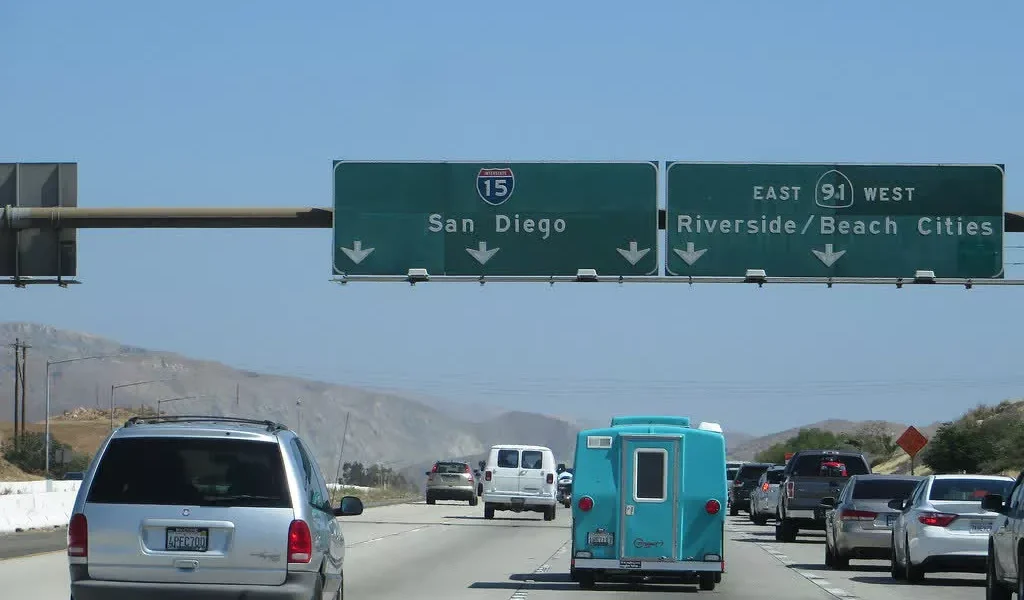
California just flipped the script on traffic jams, opening an AI-powered smart freeway that could make you wait up to four minutes to merge. This isn’t just a novelty – it’s a test to see if drivers will change their behavior to reduce congestion.
The AI-Powered Smart Freeway
The Riverside County Transportation Commission launched the smart freeway on an eight-mile stretch of the northbound lanes of Interstate 15 in Temecula on June 1. This innovative project uses real-time traffic monitoring, predictive analytics, and AI to optimize traffic flow.
The system adjusts speed limits and manages ramp metering to maintain a safe speed and reduce congestion. But here’s the interesting part: the AI will also dynamically adjust the timing of traffic signals to prevent drivers from merging into a congested freeway. This could mean a four-minute wait for some drivers.
Will Drivers Adapt?
The question is, will drivers adapt to these new rules? Theoretically, if drivers can’t merge into a congested freeway, they’ll have to find an alternative route or wait until traffic eases up. This could lead to a cultural shift in driving behavior, with more drivers leaving earlier or using alternative modes of transportation.
What This Means for You
While this smart freeway experiment might seem like a local issue, it has wider implications for the future of transportation. If successful, it could pave the way for more widespread adoption of AI-powered traffic management systems. This could lead to reduced congestion, lower emissions, and improved air quality.
Of course, there are also concerns about equity and access. Some critics worry that this system could disproportionately affect low-income households, who might not have the flexibility to adjust their schedules or commute during off-peak hours.
Only time will tell if this AI-powered smart freeway will prove to be a success. But one thing’s for sure – it’s a bold experiment that could change the way we think about traffic and transportation in California and beyond.