A Deepfake Video of Nigeria’s Top Military Brass Sparks Concerns Over AI Security.
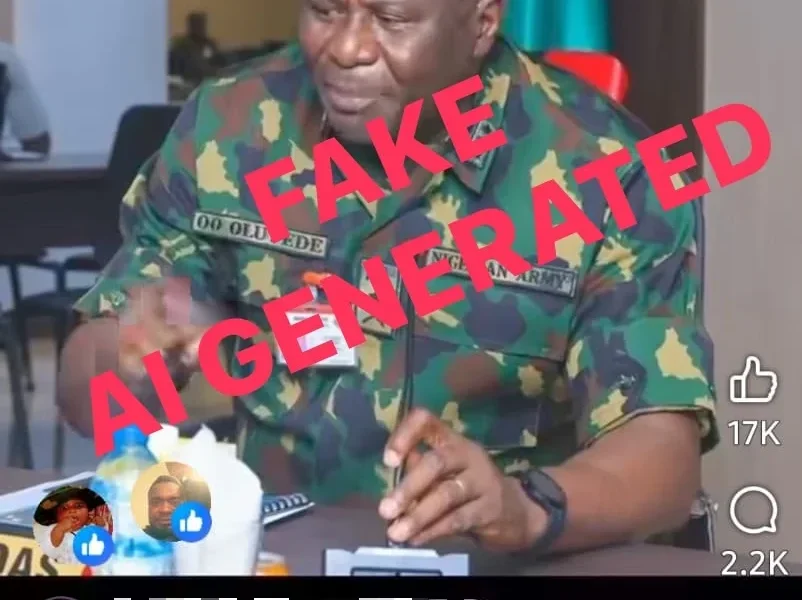
The Defence Headquarters has taken swift action to debunk a fake AI video circulating on social media, which inaccurately depicted the Chief of Defence Staff, **General Lucky Irabor**, and the Chief of Army Staff.
The video, reportedly created using Artificial Intelligence (AI) technology, has spread like wildfire on various online platforms, fuelling speculation and alarm among the public. The Defence Headquarters swiftly issued a statement dismissing the video as “fake and misleading,” reassuring citizens of the authenticity of their officials.
The authenticity of the video raises troubling questions about the capabilities of AI-generated content. The ease with which fake AI videos can be created and disseminated online highlights the need for enhanced security measures to prevent the spread of misinformation.
What this means: This incident serves as a stark reminder of the dangers of AI-generated content and the importance of verifying information before sharing it online. As AI technology continues to advance, we can expect to see more sophisticated deepfakes emerge, putting a premium on media literacy and critical thinking.
**The Rise of Deepfakes**: The emergence of deepfake technology has sparked widespread concern among experts and policymakers. This fake video is just the latest example of how AI can be used to create convincing – albeit false – content.
The military’s swift response to the deepfake video underscores the importance of fact-checking and verifying information in the digital age.
The Defence Headquarters’ move to issue a statement debunking the fake video demonstrates their commitment to maintaining transparency and trust with the public.
As AI technology advances, we can expect to see more complex and sophisticated deepfakes, making it crucial for individuals and institutions to stay vigilant and develop robust security measures to prevent the spread of misinformation.