p>
FIFA has a grass problem, but it’s not the one you might think. The governing body is grappling with the environmental impact of hosting massive international events, and its solution involves a high-tech, high-stakes bet on natural turf. The problem is that current cultivation methods are resource-intensive and leave a significant carbon footprint.
From Idea to Innovation
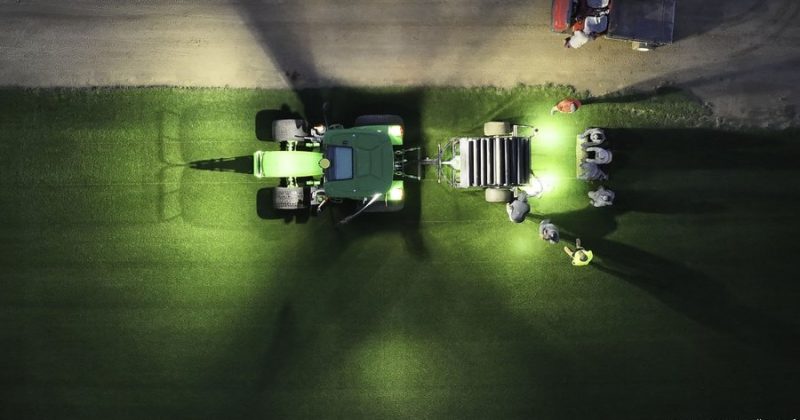
Enter the researchers from the University of Guelph in Ontario, Canada. They’re working with FIFA on a project to develop more sustainable turf production methods. The team is using advanced hydroponics and LED grow lights under domed stadiums to perfect the art of turf cultivation. It’s an ambitious undertaking, but one that could revolutionize the way sports venues are built and maintained.
Imagine a future where sports stadiums are net-positive contributors to the environment, rather than carbon sinkholes. It’s not as far-fetched as it sounds. The University of Guelph team has already made significant breakthroughs in turf growth rates and water efficiency, and FIFA is committed to rolling out these innovations on a global scale.
The Price Tag: A Fraction of the Original Estimate
So what’s the cost of this ambitious project? Forget the $4 billion figure bandied about in the media. The real cost is measured in millions, not billions. According to FIFA, the total investment in natural turf for the 2026 World Cup will be around $100 million – a fraction of the original estimate.
This isn’t a handout to a few lucky stadiums; it’s a global initiative with the potential to transform the sports industry. FIFA is working with universities, researchers, and industry partners to disseminate the knowledge and technology gained through this project.
What This Means
The FIFA World Cup’s grass project is more than just a publicity stunt or a fancy new initiative. It’s a harbinger of change in the way we build and maintain sports stadiums. By investing in sustainable turf production methods, FIFA is paving the way for a more environmentally friendly future – one that benefits both athletes and the planet. As the world’s top sports governing body, FIFA’s commitment to innovation and sustainability sets a powerful precedent for the entire industry.