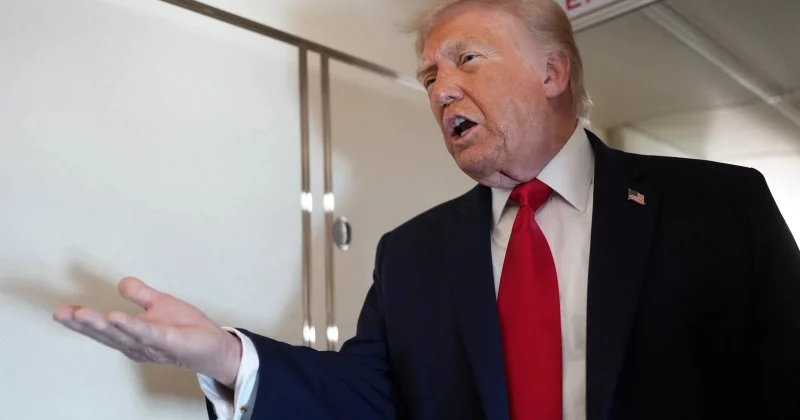
U.S. President Donald Trump is set to meet with top AI executives next week, sparking concerns about government oversight and potential conflicts of interest.
The meeting, which is expected to take place in the White House, comes as the administration explores the possibility of taking an equity stake in leading AI companies. This move could fundamentally reshape the government’s relationship with the tech industry, raising questions about who controls the narrative when it comes to AI development and regulation.
A New Era of Institutional Frameworks?
The U.S. government has historically taken a relatively hands-off approach to the tech industry, preferring to allow companies to innovate and operate with minimal oversight. However, the rapid advancement of AI technology has raised concerns about its potential impact on society, including issues related to job displacement, data privacy, and national security.
By taking an equity stake in AI companies, the government could potentially exert greater influence over these organizations, at least in theory. This could lead to the development of new institutional frameworks that balance the need for innovation with the need for responsible AI development.
Conflict of Interest Concerns
However, the idea of the government taking an equity stake in AI companies is not without its drawbacks. Critics argue that this could create conflict of interest concerns, as the government would be both a regulator and a shareholder in these companies. This could lead to a situation where the government is more focused on protecting its investment than on ensuring the public interest is served.
Another concern is that the government’s equity stake could lead to a situation where AI companies are more beholden to Washington than to their shareholders or customers. This could stifle innovation and hinder the ability of these companies to respond to changing market conditions.
What This Means
The potential for the U.S. government to take an equity stake in AI companies is a complex issue with far-reaching implications. While the goal of increasing oversight and ensuring responsible AI development is laudable, the risks of conflict of interest and stifling innovation cannot be ignored.
In practical terms, this means that the tech industry and the public should be prepared for a significant shift in the way AI companies are governed and regulated. The potential consequences of this move are too great to ignore, and it will be up to policymakers to ensure that any new frameworks are designed to protect the public interest.