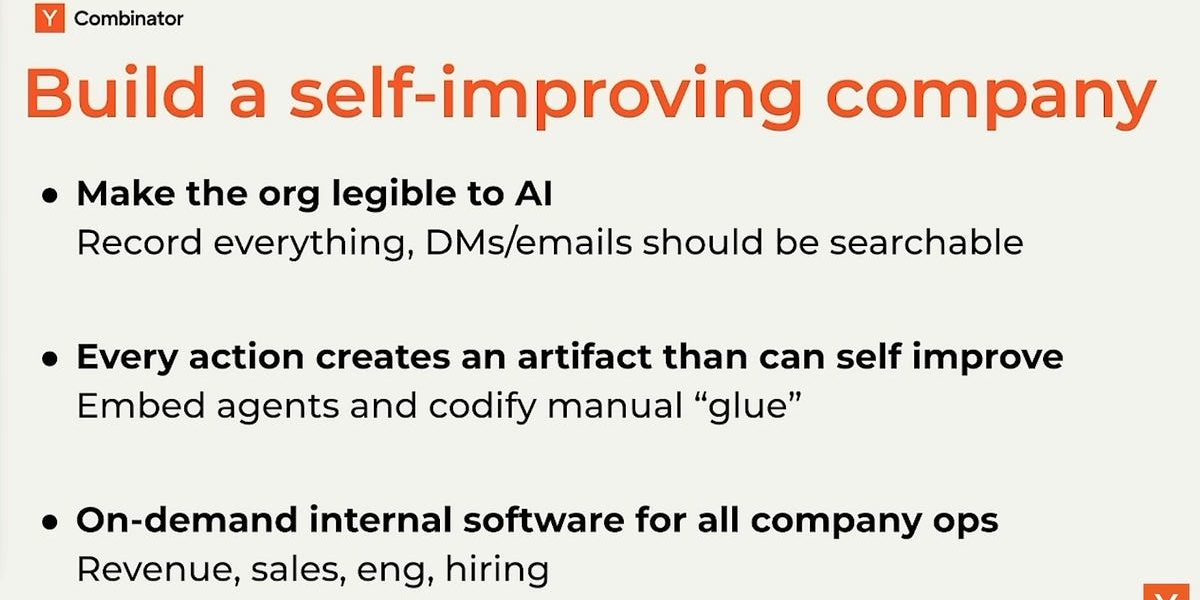
The 85-year-old work of cyberneticist Ross Ashby holds the key to understanding self-improving companies.
Ashby’s Law of Requisite Variety, published in 1956, states that a system must have at least as much variety as the system it’s trying to control. But there’s another, often-overlooked principle called the Law of Requisite Complexity, which suggests that a system needs a certain level of complexity to be able to self-modify and adapt.
This idea may seem abstract, but it has significant implications for the way companies approach innovation and competition. In essence, Ashby’s work says that self-improving systems need to have a certain level of autonomy and ability to learn from their environment.
Cyberneticist William Ross Ashby was a pioneer in the field of cybernetics, which examines the interaction between machines and living beings. His work on the Law of Requisite Complexity and the related Phase Space principle has been widely ignored, but it’s actually a fundamental concept for understanding self-improving companies.
Understanding the Forgotten Science
According to computer scientist and historian Tom Mitchell, “Ross Ashby’s work is a direct precursor to much of the modern AI research, including reinforcement learning and meta-learning.” Mitchell argues that Ashby’s principles offer a framework for understanding how self-improving systems can be designed and optimized.
Ashby’s work on the Phase Space principle states that a system without memory begins each session in the same state regardless of prior trajectory and cannot be state-determined. In essence, this means that self-improving systems need to be able to retain knowledge and experience from previous interactions in order to make informed decisions in the future.
The Implications for Business
The implications of Ashby’s work for business are significant. Companies that want to achieve self-improvement and innovation need to design systems that can learn from their environment, retain knowledge, and adapt to changing circumstances.
What this means
In practical terms, this means that companies should invest in developing systems that can learn from customer feedback, adapt to changing market conditions, and innovate at a rapid pace. This can be achieved through the use of AI and machine learning, but it requires a fundamental understanding of the underlying principles of cybernetics and self-improving systems.