The US Army’s AI-Powered “Operational-Level Maneuver” Strategy Leaves Tactical Success Behind
The US Army’s new strategy focuses on operational-level maneuver, a game-plan shift from its traditional tactical approach to warfare. This shift prioritizes the use of artificial intelligence (AI) and data analysis to enable decision-makers at the highest echelons of command.
Operational-Level Maneuver represents a fundamental change in the way the US Army approaches combat. Gone are the days of relying solely on individual units’ tactical prowess. Instead, the Army is placing its bets on a more comprehensive strategy that leverages AI and data analytics to gain a decisive edge on the battlefield.
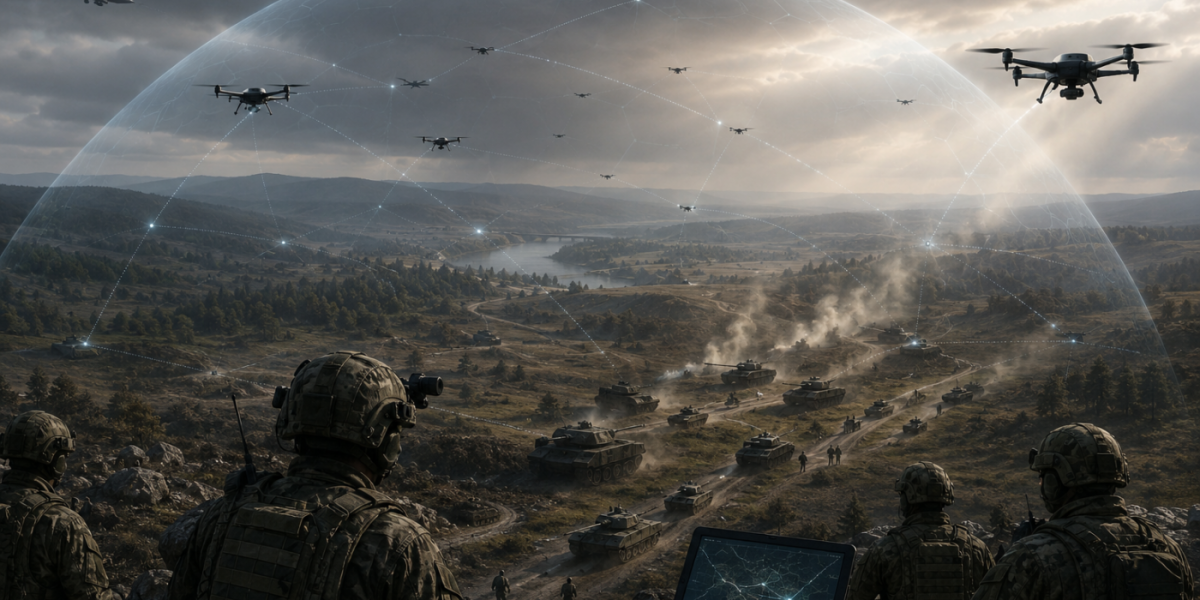
The core idea behind Operational-Level Maneuver is to break down the traditional silos that separate units and instead create a seamless web of interconnected systems and sensors. This “sensor web” would feed real-time data to commanders, allowing them to make informed decisions about troop deployments, resource allocation, and other critical aspects of warfare.
What This Means
The implications of Operational-Level Maneuver are significant. By shifting the focus from individual units to the broader operational picture, the US Army can better adapt to the complex and dynamic nature of modern warfare. This new approach has the potential to enhance situational awareness, streamline decision-making, and ultimately, improve overall mission success.
AI’s Role in Operational-Level Maneuver
AI and machine learning play a central role in the US Army’s Operational-Level Maneuver strategy. By processing vast amounts of data from various sources, AI algorithms can identify patterns and trends that would be impossible for human analysts to detect. This enables commanders to make data-driven decisions, rather than relying on intuition or guesswork.
Challenges and Opportunities Ahead
While the potential benefits of Operational-Level Maneuver are substantial, the US Army still faces significant challenges in implementing this new strategy. Integrating AI and data analytics into existing systems and processes will require significant investment and training. However, the rewards could be significant, especially if the Army can successfully harness the power of AI to gain a decisive edge on the battlefield.
In 2025, the US Army plans to begin fielding its first AI-powered operational-level systems, with the aim of fully integrating these technologies into its core doctrine by 2030. As the Army continues to evolve its approach to warfare, one thing is clear: the future of combat will be shaped by the seamless fusion of humans and machines.