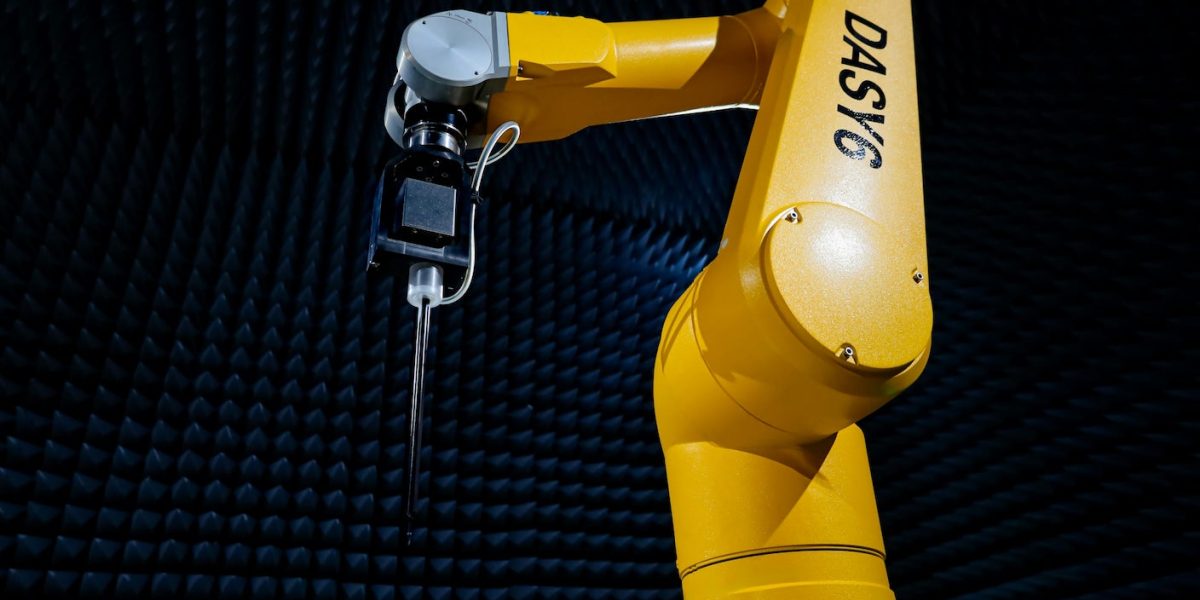
**AI Powers a Thousandfold Increase in Biological Experiments, Leaving Governance Systems Lagging.**
The latest advance in AI-driven biology has raised disturbing questions about biosecurity: a new system can autonomously design and run thousands of experiments without any human intervention.
Researchers at OpenAI have developed an AI tool that can generate, execute, and analyze biological experiments with unprecedented speed and efficiency. By automating the tedious and time-consuming process of designing experiments, this AI system is capable of conducting a staggering number of trials in a matter of weeks or even days. To put this into perspective, it’s equivalent to a researcher being able to perform the work of thousands of colleagues.
The technology relies on a sophisticated algorithm that can analyze vast amounts of data, identify patterns, and predict outcomes. This AI system can design experiments that would take human scientists months or even years to plan and execute. However, this ability to rapidly generate and execute experiments has raised concerns about the potential risks to biosecurity.
**The Governance Gap is Growing**
While the AI system is capable of conducting thousands of experiments, the systems intended to govern those capabilities are struggling to keep pace. The gap between the capabilities of AI and the preparedness of governance systems is widening, leaving a significant risk to biosecurity.
The current regulatory frameworks were designed to govern human-driven research, not AI-driven experiments. As a result, there is a growing concern that existing regulations may not be equipped to handle the risks associated with AI-powered biological research.
**What This Means**
The implications of this development are stark. As AI systems become more autonomous and capable of conducting large-scale biological experiments, there is a high risk of unintended consequences. These could include the accidental creation of infectious diseases, the misuse of biological agents, or the unintended release of genetically modified organisms.
To mitigate these risks, experts are calling for a fundamental overhaul of the current regulatory frameworks. This would involve the development of new governance systems specifically designed to handle the unique risks associated with AI-driven biological research.