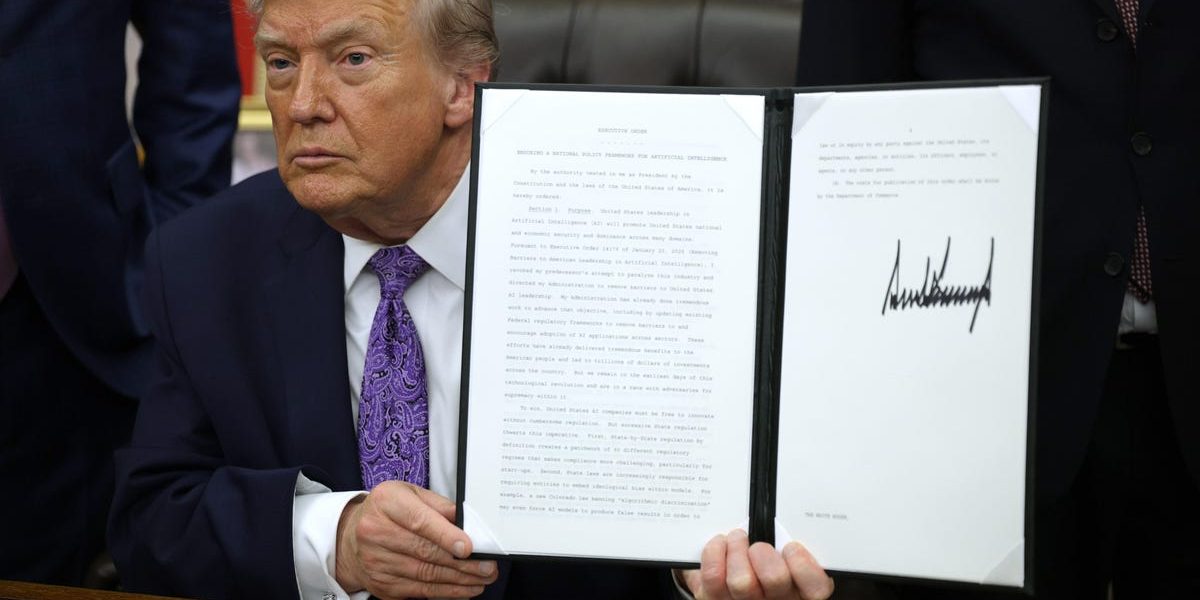
President Donald Trump’s latest executive order has left AI experts scratching their heads, wondering what exactly it’s supposed to accomplish.
No Mandatory Review Process
The order, aimed at reviewing AI models that could pose risks to the US, falls flat due to its voluntary nature. There are no penalties or requirements for AI companies to submit their advanced models for vetting. This means that companies like OpenAI and Anthropic can choose to comply or simply ignore the order.
The lack of teeth in this order has raised concerns about its effectiveness in ensuring AI safety. Dr. Nick Bostrom, director of the Future of Humanity Institute, stated that this order is “more of a gesture than a serious effort to address AI risks.” He added that “voluntary compliance is unlikely to be effective, especially when there are no clear consequences for non-compliance.”
Insufficient Regulations
The executive order also lacks specific guidelines on what constitutes a “high-risk” AI model. This ambiguity leaves room for companies to interpret the requirements in their own way, potentially leading to inconsistent and inadequate reporting. The lack of clear regulations makes it challenging for the government to assess and address potential AI risks effectively.
The absence of clear regulations also raises questions about the order’s impact on the development of AI models. Without a framework for reviewing and assessing AI models, companies may feel less inclined to submit their models for review, making it harder to identify and mitigate potential risks.
What This Means
The Trump administration’s executive order on AI is more of a publicity stunt than a serious effort to address AI risks. The lack of mandatory review processes and clear regulations makes it unlikely to have a significant impact on the development and deployment of AI models. This means that AI companies will likely continue to operate with minimal oversight, leaving the public and policymakers concerned about the potential consequences of AI development.