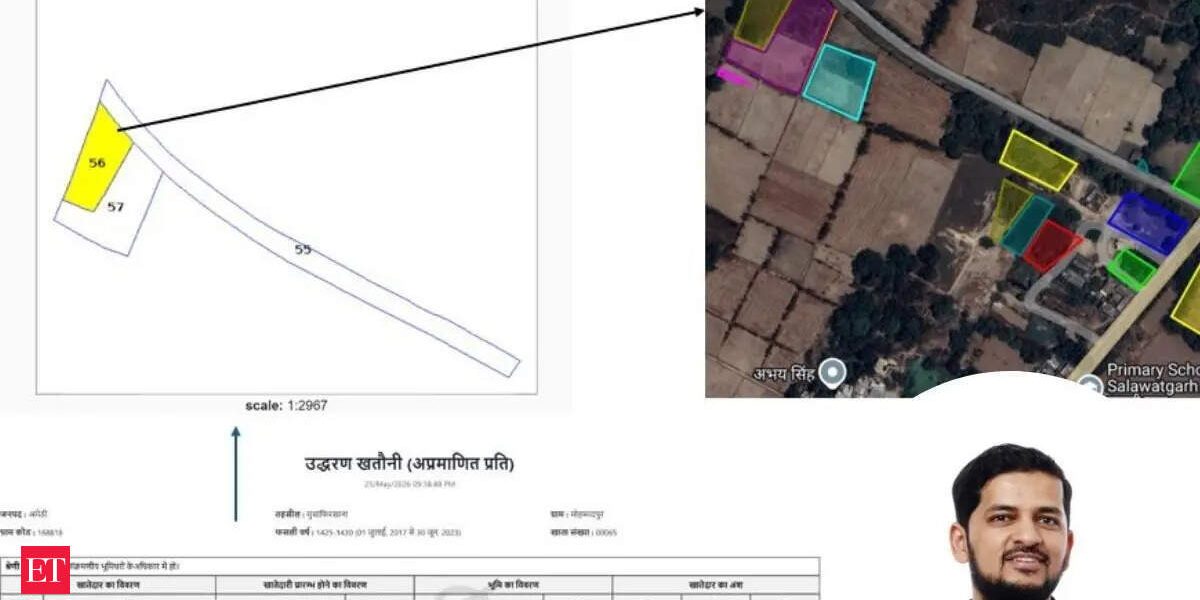

Zahid Khan, a resident of Uttar Pradesh’s Mohammadpur village, relied on an AI assistant to track down 25 pieces of ancestral land he barely knew existed. The AI tool’s ability to decipher government portals and decode maps proved instrumental in solving a decades-old mystery surrounding Khan’s family’s land ownership.
Khan’s ancestors had cultivated these lands for generations, but the family’s records were scattered and mostly in technical Hindi. The absence of clear documentation made it difficult for Khan to identify and claim these ancestral plots. However, with the AI assistant’s help, he was able to pinpoint the exact locations of these lands.
AI-Powered Land Search
The AI tool used by Khan allowed him to seamlessly navigate government portals and decode maps, which were often in a state of disarray. This innovative use of AI has far-reaching implications for people searching for their ancestral lands, particularly in rural areas where land records are often fragmented and inaccessible.
What this means
For individuals like Khan, who may not have the time or resources to devote to researching their family’s history, AI-powered tools can be a lifesaver. By leveraging AI technology, people can tap into a vast array of government records and maps to uncover lost or hidden information about their ancestral lands.
Deciphering Decades-Old Records
The AI assistant’s ability to decipher technical Hindi and decode maps also made it easier for Khan to understand the complexities of his family’s land ownership. The tool’s language processing capabilities allowed it to recognize and translate obscure terms, facilitating a deeper understanding of the land records.
Khan’s story highlights the potential of AI to revolutionize the way we interact with government records and maps. As more people turn to AI-powered tools to navigate complex systems, we can expect to see increased access to information and a reduced burden on individuals seeking to understand and claim their ancestral lands.