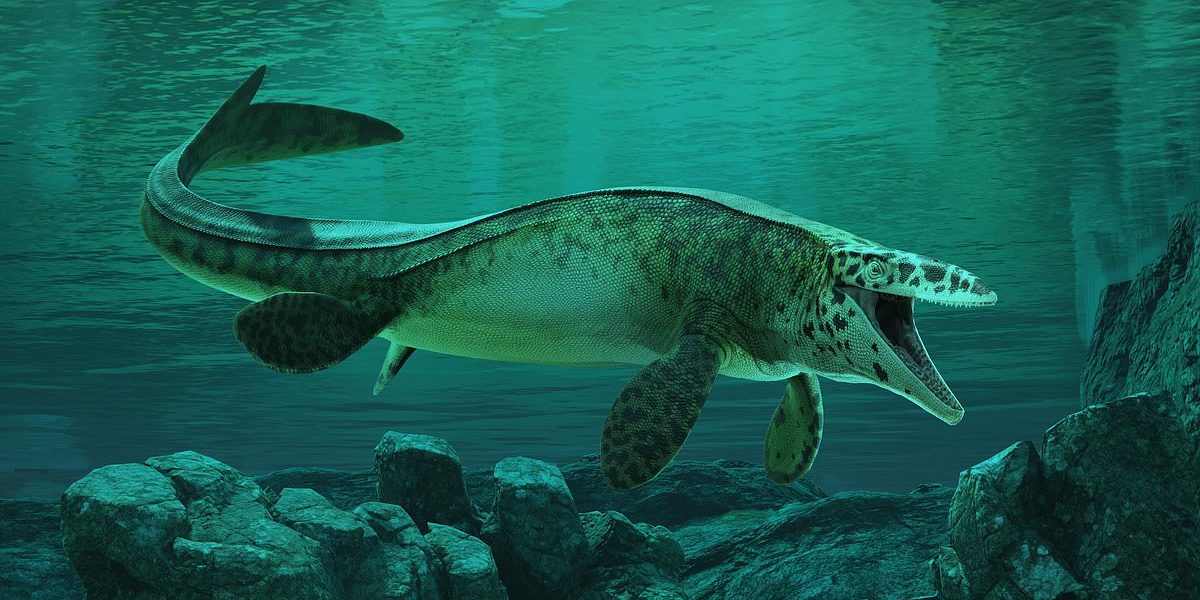
A fossil discovery in North America has revealed a 43-foot-long mosasaur that has the scientific community abuzz, with many hailing it as a new species of ‘T. rex’ of the seas, Tylosaurus rex.
Fearsome Fossil Find
The massive predator, estimated to have lived around 80 million years ago during the Late Cretaceous period, was uncovered in North Dakota and measured a staggering 43 feet in length. To put that in perspective, a typical school bus is around 45 feet long, so we’re talking a seriously enormous creature.
While it’s worth noting that the name “T. rex” is typically associated with the iconic land-dwelling dinosaur, the Tylosaurus rex gets its name for a reason – its skull bears a striking resemblance to that of the fearsome Tyrannosaurus rex, with a similar shape and size.
What a Prehistoric Predator
The mosasaur, a type of marine reptile, was a formidable hunter that likely preyed upon fish, squid, and other marine animals. Its sharp teeth and powerful jaws make it a prime candidate for a top-tier ocean predator, and its massive size would have allowed it to take on prey much larger than itself.
The discovery of Tylosaurus rex has been hailed as one of the most significant in years, with many experts praising the find as a major breakthrough in understanding the evolution of marine predators during the Cretaceous period.
What this means
The discovery of Tylosaurus rex highlights the incredible diversity of life on Earth during the Mesozoic era, a time when dinosaurs ruled the land and marine reptiles dominated the oceans. While we may never get to see a mosasaur like Tylosaurus rex in person, its fossil remains offer a fascinating glimpse into the prehistoric world and the incredible creatures that once called it home.