**Trump Postpones AI Oversight Order Amid Last-Minute Lobbying**
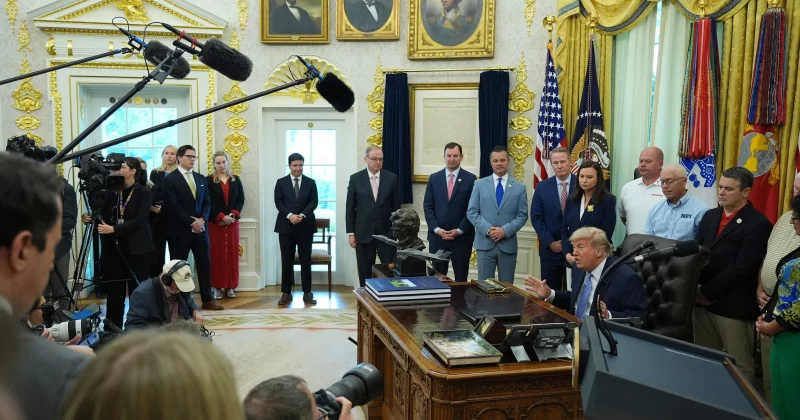
President Donald Trump has delayed a long-awaited executive order aimed at regulating the development and use of artificial intelligence, following intense lobbying from tech industry leaders.
Elon Musk, Mark Zuckerberg, and White House AI Czar David Sacks are among those who reportedly pressured the president to call off the signing ceremony just hours before it was scheduled to take place.
The executive order, which has been in the works for months, was intended to establish standards and guidelines for the development and deployment of AI systems. Proponents argued that stringent regulations were necessary to prevent the misuse of AI and mitigate its potential risks, such as job displacement and bias in decision-making.
However, the tech industry has long argued that excessive regulations would stifle innovation and hinder the development of AI technologies. Industry leaders, including those who lobbied against the executive order, have been pushing for a more nuanced approach to AI regulation that prioritizes self-regulation and industry-led standards.
**What this means**
The delay in the executive order may lead to a shift towards industry self-regulation, with tech companies taking the reins in developing their own standards and guidelines for AI development and deployment. This could result in a more innovative and flexible approach, but also potentially one that prioritizes corporate interests over public safety and accountability.
Critics argue that self-regulation would leave the public vulnerable to the whims of tech giants, who may prioritize profit over people. On the other hand, proponents see self-regulation as a way to balance the need for safety and accountability with the need to foster innovation and economic growth.
The outcome of this development remains uncertain, but one thing is clear: the fate of AI regulation in the US has taken a significant turn, and the consequences will be far-reaching.
**Industry self-regulation: a double-edged sword**
While industry self-regulation may offer flexibility and innovation, it also raises concerns about accountability and transparency. Without clear and robust regulations, the public may be left in the dark about the risks and implications of AI systems, and companies may feel emboldened to prioritize their own interests over public safety.
The stage is now set for a fierce debate about the future of AI regulation in the US, with tech industry leaders and public advocates vying for influence. As the stakes grow higher, one thing is certain: the development and deployment of AI will continue to shape the world in profound ways, and the rules governing its use will have far-reaching consequences for all of us.