Cloud computing services like AWS and Google Cloud are being used to build custom AI stacks that outperform traditional solutions.
The Rise of AI Stacks
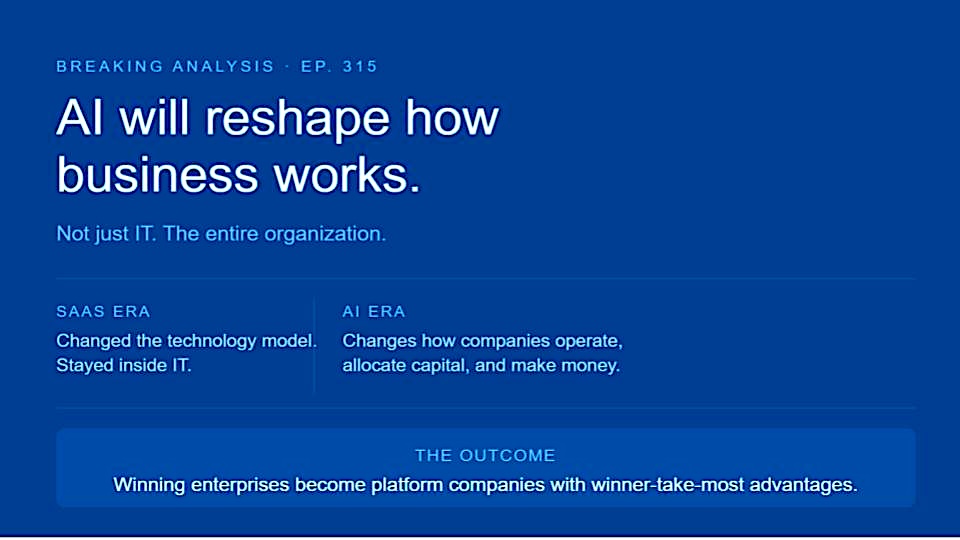
Software as a Service (SaaS) has transformed the way businesses build, buy, and operate software. Now, AI stacks are rewriting the rules of business, forcing companies to rethink their approach to technology.
What’s driving this shift?
The shift from on-premises computing to software as a service changed the technology model and forced information technology organizations to modernize how they build, buy, and operate software. But what’s really driving this shift to AI stacks is the need for greater flexibility and scalability in a fast-paced, data-driven world.
With SaaS, businesses can quickly spin up new applications and services without having to worry about the underlying infrastructure. But as data becomes increasingly important, companies need to be able to analyze and act on it quickly. That’s where AI stacks come in – they’re designed to handle the complex tasks of data analysis and machine learning, freeing up IT teams to focus on higher-level strategy.
The benefits of AI stacks
AI stacks offer a number of benefits over traditional solutions, including greater scalability, flexibility, and cost-effectiveness. They’re also more secure, as they’re often built on top of cloud-based services that have built-in security features.
But what this means for businesses is that they can now build and deploy custom AI solutions that are tailored to their specific needs. No longer are they limited to off-the-shelf software that may not meet their requirements. With AI stacks, they can create applications that are truly bespoke, using the latest AI and machine learning techniques to drive business value.
As IT teams begin to adopt AI stacks, it’s likely that we’ll see a significant shift in the way businesses approach software development and deployment. With the ability to quickly spin up new AI-powered applications, companies will be able to respond faster to changing market conditions and stay ahead of the competition.