AMD’s AI Ambitions Pin Hopes on CPUs, Not Just GPUs
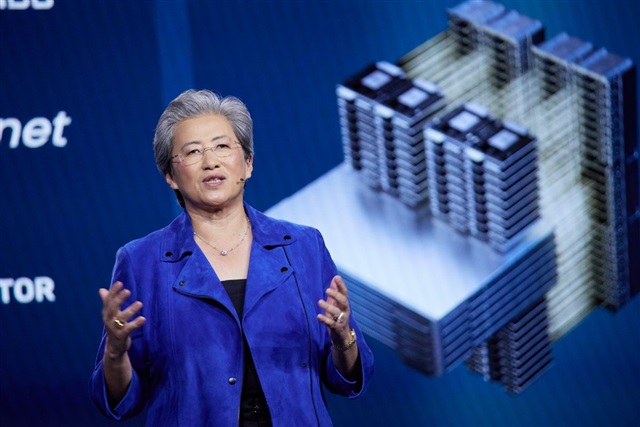
AMD is redefining itself as a major player in the AI market, and its bet on CPUs as much as GPUs is a significant shift in the industry. Under CEO Lisa Su, the company is expanding its AI offerings beyond graphics processing units (GPUs), which were once the sole focus of its AI ambitions.
AMD’s decision to push CPUs into the AI fray has significant implications for the market. Traditional AI workloads have relied heavily on GPUs, but AMD is now positioning its central processing units (CPUs) as viable alternatives. This could lead to a more level playing field for AMD in the AI hardware market, where Nvidia has long dominated.
The competition in the AI hardware space is about to heat up, with Intel also vying for a share of the market. The Redmond giant has announced plans to release a series of high-performance AI-focused CPUs, further blurring the lines between traditional computing and AI processing. AMD, meanwhile, is investing heavily in its EPYC CPU line, which is expected to play a key role in the company’s AI strategy.
A More Balanced Approach to AI
AMD’s decision to focus on both CPUs and GPUs reflects a changing understanding of what it takes to build successful AI systems. Traditional AI workloads often require the high-performance processing power of GPUs, but other applications, such as real-time inference and edge AI, may not need the same level of acceleration. By offering CPUs as an alternative, AMD is providing customers with more flexibility and choice in their AI hardware decisions.
This approach also acknowledges that AI is not a one-size-fits-all solution. Different applications have different requirements, and AMD is positioning itself as a company that can deliver on a range of AI workloads. Whether it’s the high-performance computing needs of data centers or the more modest processing requirements of edge AI, AMD claims it has the hardware to meet the challenge.
What This Means
AMD’s decision to bet on CPUs as much as GPUs sends a clear message: the future of AI is going to be more diverse and complex than ever before. As AI workloads continue to diverge and evolve, hardware companies will need to offer more flexible and adaptable solutions. In this new landscape, AMD is looking to carve out a niche for itself as a company that can deliver on a range of AI hardware needs.