
Researchers Uncover Surprising Link Between Trust in AI and Digital Innovation
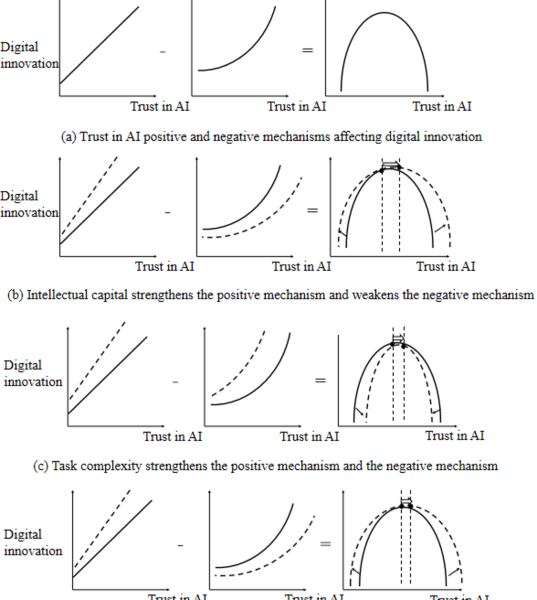
A new study has found that trust in artificial intelligence (AI) plays a crucial role in determining the success of human-AI collaborative innovation in firms. The study, published in the journal MIS Quarterly, analyzed the impact of trust in AI on digital innovation, examining the moderation of intellectual capital and task characteristics.
According to the researchers, trust in AI was found to be a key determinant of the effectiveness of human-AI collaborative innovation. However, the study also revealed that trust in AI has a more complex relationship with digital innovation than previously thought.
A Delicate Balance Between Trust and Intellectual Capital
The study, conducted by a team of researchers led by S. Nambisan, found that trust in AI plays a moderating role in the relationship between intellectual capital and digital innovation. Intellectual capital, which includes knowledge, creativity, and innovation, is a critical component of digital innovation. However, the study found that trust in AI can either enhance or hinder the relationship between intellectual capital and digital innovation, depending on the task characteristics.
Task Characteristics: The Key to Unlocking Trust in AI
The study also identified task characteristics as a critical factor in determining the impact of trust in AI on digital innovation. The researchers found that tasks that require low levels of cognitive complexity and high levels of creativity are more likely to benefit from trust in AI. Conversely, tasks that require high levels of cognitive complexity and low levels of creativity are less likely to benefit from trust in AI.
The findings of the study have significant implications for firms seeking to leverage AI for digital innovation. According to the researchers, trust in AI must be carefully managed to unlock its full potential. This requires firms to develop a deep understanding of task characteristics and to create an environment that fosters trust in AI. By doing so, firms can unlock the full potential of AI and drive digital innovation.
What this means
For businesses, the study’s findings mean that trust in AI is not a one-size-fits-all solution. Rather, it requires a nuanced understanding of task characteristics and the ability to adapt AI systems to specific tasks. By prioritizing trust in AI and carefully managing task characteristics, firms can unlock the full potential of AI and drive digital innovation.


