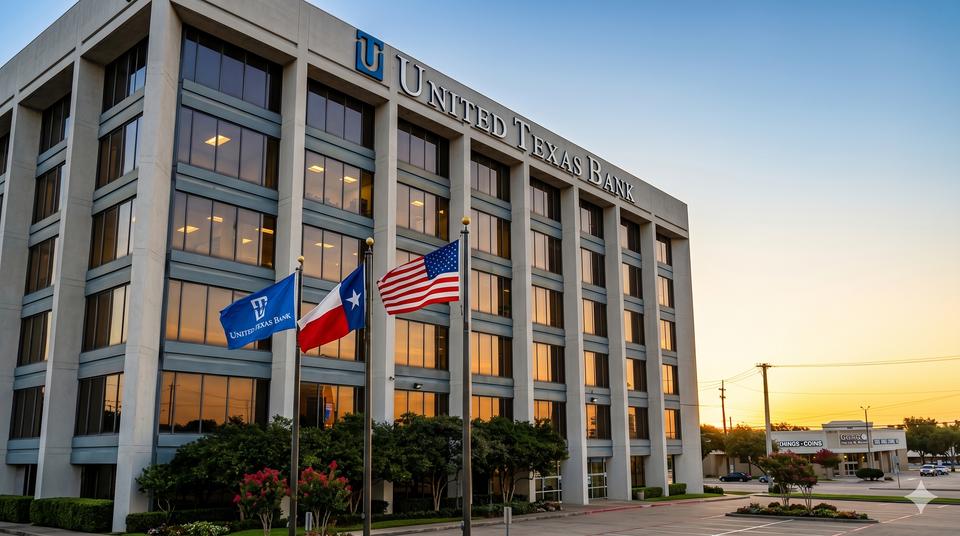
Forty-Year-Old Texas Bank Takes Aim at Wall Street with National Charter
United Texas Bank, a stalwart in Texas banking since 1983, has just secured a national charter under the executive branch, a move that sets the stage for the bank to challenge Wall Street’s dominance in the digital asset industry. The bank’s sights are set squarely on facilitating the growth of AI-driven payment systems that can tap into the burgeoning global digital dollar market.
Texas Bank Seeks to Disrupt Traditional Banking
By leveraging the national charter, United Texas Bank (UTB) aims to establish itself as a direct competitor to Wall Street’s behemoths in the digital sphere. This pivot marks a significant shift for the bank, which has traditionally focused on serving local communities. The national charter now grants UTB the authority to operate on a national scale, with the potential to reach a far wider customer base.
AI-Driven Payment Rails Take Center Stage
At the heart of UTB’s ambitions lies its intention to develop AI-driven payment rails that can intercept global digital dollar volumes. This innovative approach seeks to streamline cross-border transactions, reducing the costs and complexities associated with traditional banking methods. The use of AI in payment systems has the potential to increase efficiency, security, and speed, making it an attractive solution for businesses and individuals alike.
The implications of UTB’s move are far-reaching, and the bank’s CEO, Tom Harris, has emphasized the need for more efficient payment systems in a statement. “We believe that our national charter and AI-driven payment rails will enable us to provide a more seamless and secure experience for our customers, while also helping to drive the growth of the digital asset industry as a whole.”
What this means
For consumers, this development could lead to faster, cheaper, and more secure cross-border transactions. For businesses, it may unlock new opportunities for growth and expansion. And for Wall Street, it represents a new challenge in the form of a well-established, AI-driven competitor. As United Texas Bank continues to push the boundaries of what’s possible in the world of digital banking, one thing is clear: the stakes have just gotten a lot higher for those vying to shape the future of the financial industry.